
Digital Detox Wind-Down for Sleep and Skin
Your screen is stealing your glow, one hour at a time, and it is doing it quietly enough that most people never trace their dull morning skin back to the scrolling that happened the night before. A digital detox is a deliberate, screen-free wind-down in the sixty to ninety minutes before bed, and it is one of the few habits that measurably improves both how you sleep and how your skin looks the next morning.
This is not about eye strain, though that is real too. It is about what happens to your hormones, your circadian clock, and your overnight skin repair when a bright screen convinces your brain that it is still daytime. The fix is not complicated, but it does need to be deliberate, since nothing about a phone's design nudges you toward putting it down.
The Blue Light Problem
In a controlled study, participants who spent four hours reading on a light-emitting e-reader before bed took longer to fall asleep, secreted less melatonin, had their circadian clock measurably delayed, and were less alert the next morning compared to reading an identical printed book (Chang et al., 2015). Melatonin is not just a sleep hormone in the abstract sense; it is the signal that tells your body the overnight repair window has opened. A screen held eighteen inches from your face in the two hours before bed delays that signal, which means it delays everything downstream of it too, skin repair very much included.
What makes this easy to miss is that the effect is cumulative rather than dramatic on any single night. One late night scrolling rarely feels like much the next morning. It is the pattern, repeated most nights for months, that adds up to a circadian rhythm that never quite settles into its natural range, which shows up less as obvious exhaustion and more as skin that looks perpetually a little tired regardless of how much concealer is involved.
The 90 Minutes Before Bed Protocol
T-90 Minutes: Last Scroll
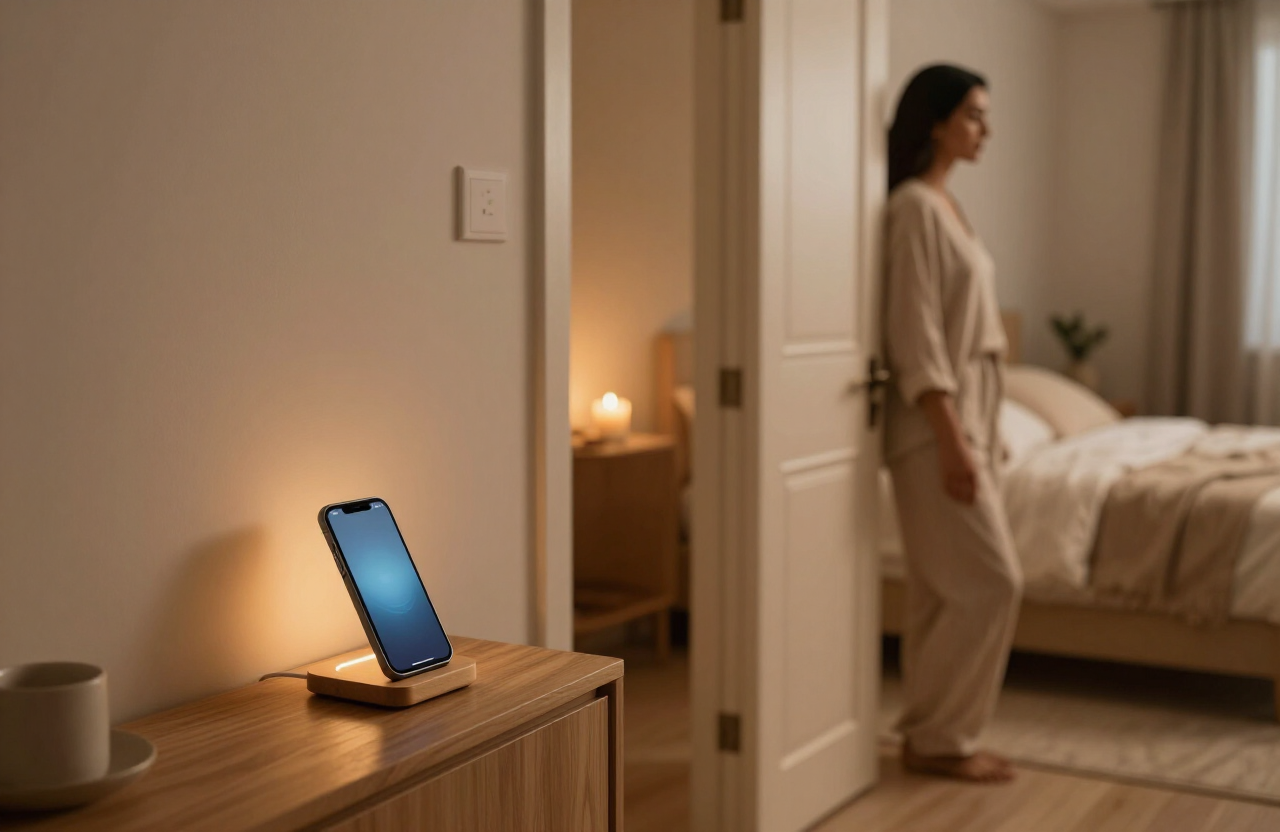
Set a genuine cutoff. Switch your phone to grayscale or its built-in sleep mode, then plug it in somewhere outside your bedroom entirely. Removing the option to reach for it matters more than willpower does; a phone across the room gets checked far less often than one within arm's reach, regardless of how firm your intentions were an hour earlier. If a charging station outside the bedroom feels impossible because the phone doubles as your alarm, that single habit is worth solving on its own before anything else on this list, since it undermines every step that follows it.
T-60 Minutes: The Transition Ritual
Dim the overhead lights. Light a candle if you have one, since actual flame light contains almost none of the blue wavelength that suppresses melatonin. Change into the clothes you will actually sleep in. This is a small, physical cue that tells your nervous system the day's demands are over, which matters more than it sounds like it should. The clothing change in particular works as what behavioral researchers call a state cue: a specific, repeated action that your brain learns to associate with a specific mode, in this case winding down rather than being on.
T-45 Minutes: Skincare as the New Scroll
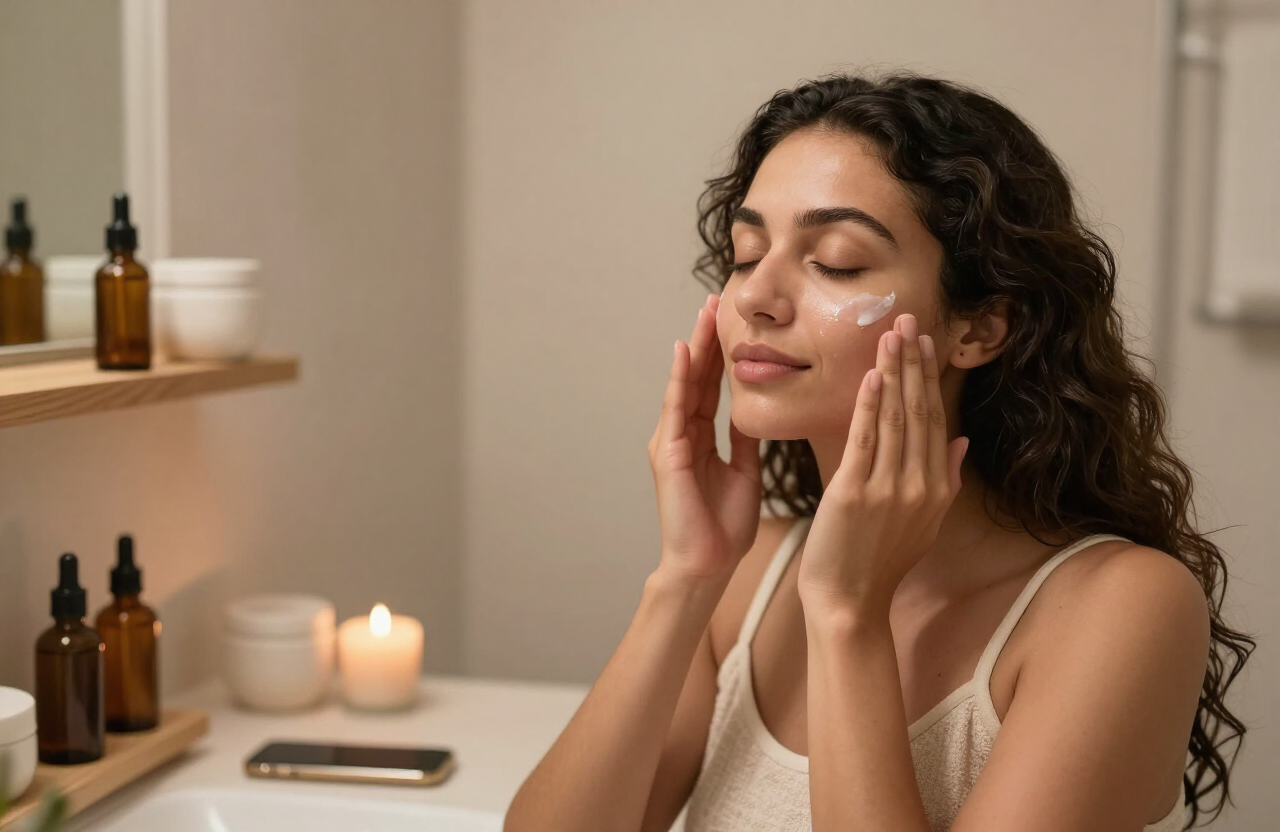
This is where the habit you are trying to break gets replaced with one that pulls double duty. Do your skincare slowly and with full attention, a double cleanse if your evening calls for it, each layer applied with an actual pause before the next rather than rushed on in sequence. Your hands are occupied, your attention has somewhere to go besides a screen, and your skin gets the benefit of products that were actually given time to absorb. If you want to go further, this step pairs directly with a full skin meditation ritual, turning the fifteen minutes into an intentional practice rather than just a habit swap.
T-30 Minutes: Analog Activity
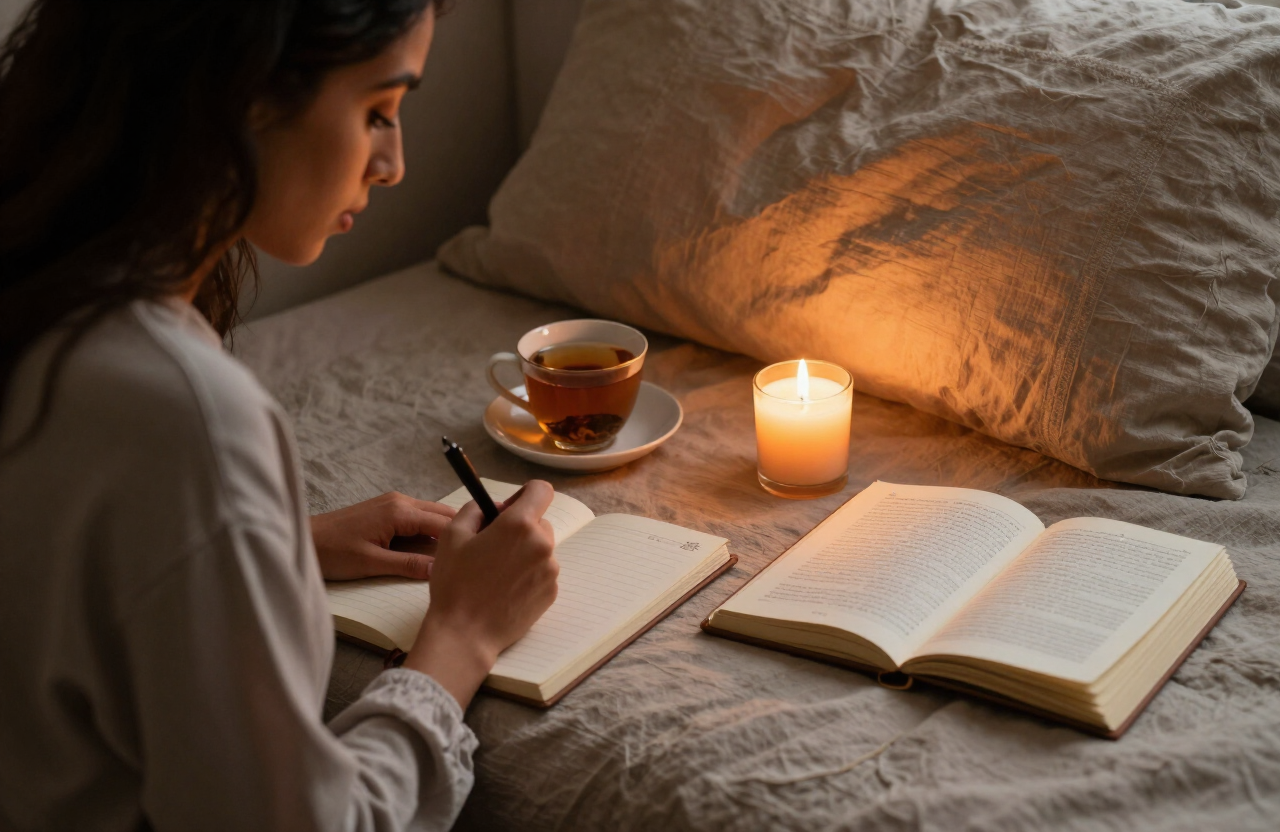
Journaling, a paper book, gentle stretching, or a cup of herbal tea. The specific activity matters less than the medium: nothing backlit, nothing that pulls you into a feed with no natural stopping point. This is the window where most people notice their mind finally slowing down, often to their own surprise.
T-10 Minutes: Bed Entry
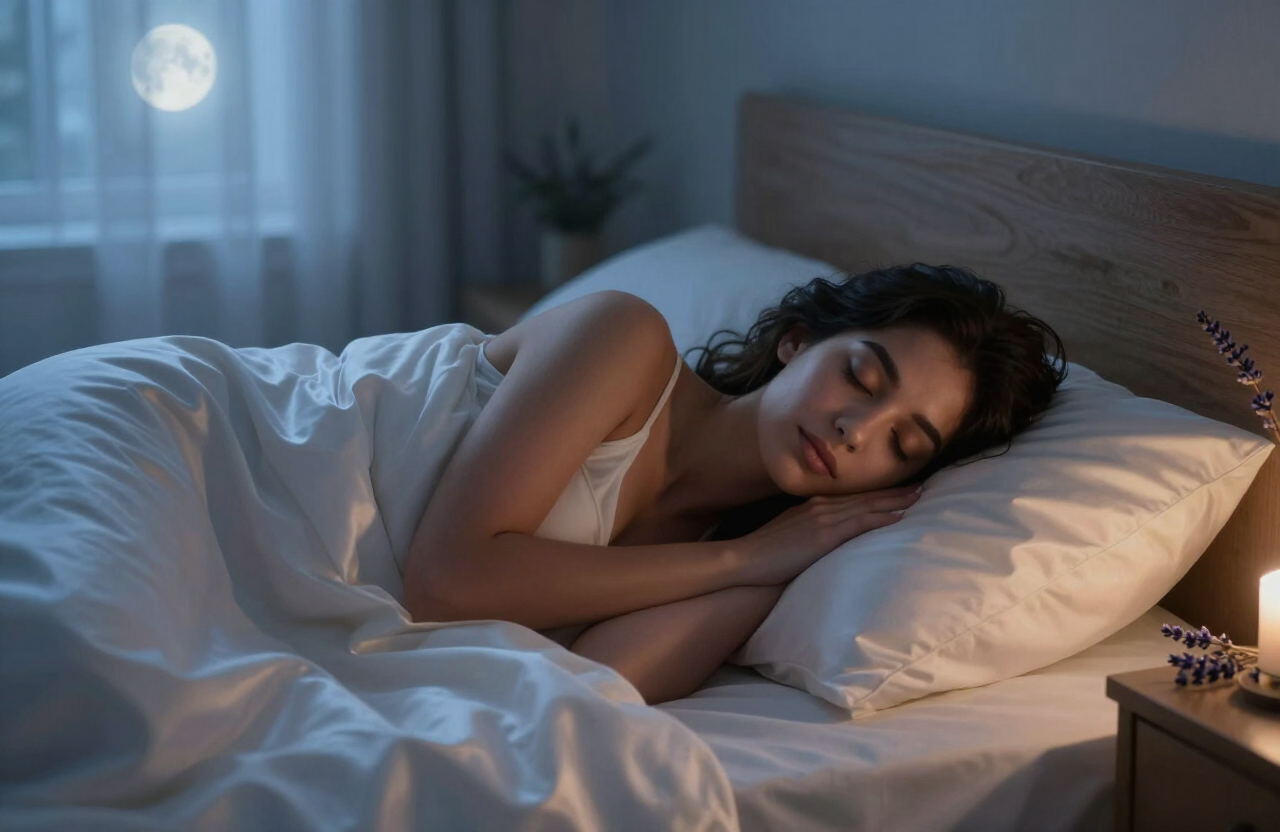
Keep the room cool, most sleep research points to somewhere around 18 to 20 degrees Celsius as the range that supports deeper sleep. A silk or cotton pillowcase reduces friction against skin overnight, which matters if you already deal with irritation or texture from your usual pillowcase fabric. A trace of lavender or chamomile scent, on the pillow or in a diffuser, is optional but genuinely calming for many people.
The Skin-Sleep Payoff
Growth hormone releases in its largest pulses during deep, slow-wave sleep, the stage a digital detox protects by helping you fall asleep faster and reach that stage sooner. Growth hormone drives collagen synthesis directly, which is the literal reason a single bad night shows up as duller, less resilient skin the next day. The connection is not just theoretical: in a controlled study of sixty women, good sleepers showed 30% greater skin barrier recovery after a standardized skin-barrier disruption test than poor sleepers, along with better recovery from UV-induced redness and higher self-reported satisfaction with their own appearance (Oyetakin-White et al., 2015). A digital detox is, functionally, one of the more direct ways to protect the skin barrier repair window that happens automatically once you are actually asleep.
None of this requires tracking sleep stages or owning a sleep-tracking ring. The mechanism runs in the background regardless of whether you measure it; the digital detox simply removes the one obstacle, delayed melatonin, that most reliably keeps you from reaching deep sleep quickly and staying there long enough for the hormone pulse to do its work.
If You Must Use Screens
Some nights the protocol is not realistic, a late work email, a call with someone in a different time zone. When that happens, blue-light blocking glasses and your device's built-in night mode both genuinely reduce, though do not eliminate, melatonin suppression. Keep the brightness as low as the screen allows. And the next morning, add a step your skin does not usually need: extra hydration, since a shortened repair window leaves less time for your barrier to hold onto moisture overnight.
Week 1 Challenge
Commit to three nights this week, not seven; three is realistic enough that most people actually complete it, which matters more than an ambitious plan abandoned by Tuesday. Track two things each of those mornings: a rough sleep-quality rating and one honest word for how your skin looks. By the end of the week, most people have their own small dataset showing exactly how closely the two are connected, which tends to do more to sustain the habit than any amount of research citations. Once three nights feel automatic, adding a fourth is usually easier than the first three were combined.
Frequently Asked Questions
Does grayscale mode actually reduce blue light?
Not directly, grayscale removes color rather than wavelength, but it makes the screen meaningfully less stimulating and less rewarding to keep scrolling, which reduces total exposure time in practice.
What if I use my phone as an alarm clock?
Buy a five-dollar alarm clock. This single change removes the most common reason people keep their phone on the nightstand and end up scrolling in bed.
Is 90 minutes really necessary, or does 30 work too?
Thirty minutes still helps meaningfully. Ninety is the range shown to fully allow melatonin secretion to resume its normal evening rise, but any screen-free window before bed is a genuine improvement over none.
Can I read on my phone if the brightness is very low?
It helps, but the light-emitting screen itself, not just its brightness, is the core issue in the research. A physical book or an e-ink reader without backlighting is the closer equivalent to zero exposure.
Will this actually change how my skin looks, or just how I feel?
Both, and the two are linked through the same mechanism. Better sleep quality is tied to measurably better skin barrier recovery and UV resilience, not just a subjective sense of looking rested.
What if I share a bedroom and can't control the lighting?
Focus on what you control: your own device, a small reading lamp instead of overhead light on your side of the room, and your own pre-bed routine. Partial control still produces a partial, genuine benefit.
Does the order of the steps actually matter, or just the total screen-free time?
The rough order helps because each step naturally gets calmer than the last, but total screen-free time before sleep is what the research actually measures, so a different order that still adds up to ninety unplugged minutes works too.
None of this asks you to give up your phone. It asks for ninety quiet minutes it was already taking from you, just returned to a form that lets your hormones, your sleep, and your skin actually use them, one screen-free evening at a time.
Explore more Zen rituals and mindful practices at healzenglow.com/zen.
Sources
This article draws on the following peer-reviewed research on light, sleep, and skin recovery:
- Chang, A. M., Aeschbach, D., Duffy, J. F., & Czeisler, C. A. (2015). Evening use of light-emitting eReaders negatively affects sleep, circadian timing, and next-morning alertness. Proceedings of the National Academy of Sciences, 112(4), 1232-1237.
- Oyetakin-White, P., et al. (2015). Does poor sleep quality affect skin ageing? Clinical and Experimental Dermatology, 40(1), 17-22.