Gut-Skin Axis Routine for Clearer Skin and Hair
Expensive serums not working? The gut-skin axis might be why. What it is, in plain terms, plus a daily routine that shows in your skin within weeks.
If you've ever spent a small fortune on a serum, used it faithfully for months, and watched your skin do almost nothing, you already suspect what the research has been quietly confirming for years: the state of your skin is shaped less by what you put on it than by what's happening inside you. The gut-skin axis is the two-way conversation between your digestive system and your skin, and it goes a long way toward explaining why two people can use the same moisturizer and get completely different results. This guide explains the gut-skin axis in plain terms, why it also affects your hair, and a simple daily routine that begins to show in the mirror within weeks rather than months.
In this guide:
- What the gut-skin axis actually is
- Why gut trouble shows up on your skin first
- The gut-hair connection and telogen effluvium
- Signs of gut dysbiosis on the skin
- The 30-plants-a-week rule that changes everything
- A daily gut-skin routine, step by step
- How long it takes to see results
What the Gut-Skin Axis Actually Is
The gut-skin axis is the constant biochemical conversation between your gut microbiome — the trillions of bacteria, yeasts, and other microbes living in your digestive tract — and your skin, the largest organ in your body. They talk to each other through three main channels: the immune system, which gut microbes help train and regulate; the bloodstream, which carries microbial by-products and inflammatory signals throughout the body; and the nervous system, including the vagus nerve, which links gut health directly to stress responses that show up as breakouts, redness, or shedding hair.
When the gut is balanced, that conversation is calm. The microbes produce short-chain fatty acids like butyrate that soothe inflammation, strengthen the gut lining, and help keep the skin's own barrier intact. When the gut is out of balance — a state called dysbiosis — the conversation turns hostile. The gut lining becomes more permeable, inflammatory molecules leak into the bloodstream, and the skin, which is highly reactive to systemic inflammation, responds with acne, rosacea flares, dullness, eczema, or accelerated aging.

Why Gut Trouble Shows Up on Your Skin First
The skin is often the first place gut dysfunction becomes visible, and there's a reason for that. Your gut and your skin share an embryonic origin and many of the same signaling pathways, which is why they react to the same triggers in similar ways. More practically, the skin is a fast-turnover tissue: it renews itself roughly every 28 days, so any shift in the body's inflammatory state shows up there quickly, long before it would show up on a blood panel or in how you feel day to day.
A compromised gut lining lets fragments of bacteria and undigested food proteins slip into the bloodstream, where the immune system treats them as threats and mounts a low-grade inflammatory response. That systemic inflammation travels to the skin and disrupts its barrier, increases sebum oxidation, and feeds the kind of bacteria that cause acne. This is why gut-focused approaches now sit alongside topical treatments in dermatology research, and why so many people find their skin clears only after they address digestion, stress, and sleep rather than switching to a stronger cream.
The Gut-Hair Connection and Telogen Effluvium
Hair is less forgiving than skin because it grows in cycles and can't adapt on the fly. Each follicle moves through a growing phase (anagen), a short transition (catagen), and a resting phase (telogen) before the strand sheds. When the body senses a stressor — illness, rapid weight loss, a severe nutrient gap, or chronic gut inflammation — it can push an unusually large number of follicles into the resting phase all at once. Two to three months later, that hair sheds in a diffuse pattern known as telogen effluvium.
Gut health feeds into this in two ways. First, an inflamed gut absorbs nutrients poorly, so even a balanced diet may not reach your follicles in the amounts they need — iron, zinc, biotin, and protein are all hair-critical and all depend on a healthy gut lining to be absorbed efficiently. Second, gut-driven inflammation raises systemic stress signals that can themselves trigger the shift into telogen. If your hair has thinned without an obvious cause and your skin has been reactive at the same time, the gut is one of the first places worth looking.

Signs of Gut Dysbiosis on the Skin
You don't need a lab test to spot the common skin signs that point back to the gut. They tend to cluster, and they often resist topical treatment until the underlying digestive imbalance is addressed.
- Persistent adult acne along the jawline and chin, often hormonal and inflammatory in nature.
- Rosacea flares, facial redness, or a tendency to flush easily after eating.
- Dull, congested skin that looks tired no matter how much you exfoliate.
- Eczema or dry, itchy patches that come and go without a clear trigger.
- Slow wound healing and lingering red marks long after a blemish has gone.
- Increased skin sensitivity and a compromised barrier that reacts to products it used to tolerate.
- Hair shedding that's diffuse rather than patchy, especially two to three months after a period of stress or illness.
The 30-Plants-a-Week Rule That Changes Everything
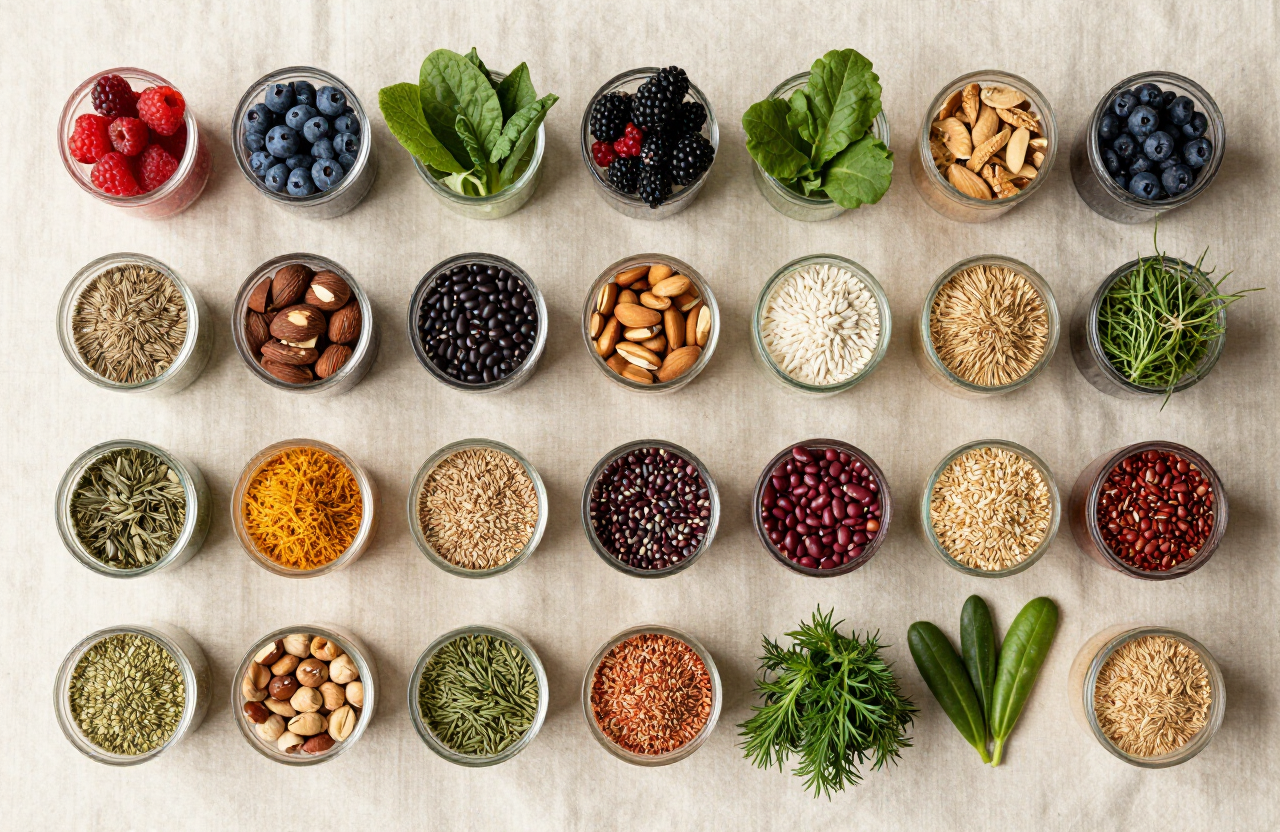
If there's one habit worth taking from gut-microbiome research, it's the 30-plants-a-week rule. It comes from the American Gut Project, one of the largest citizen-science studies of the microbiome, which found that people who ate at least 30 different plant species each week had a significantly more diverse gut microbiome than those who ate fewer — and microbial diversity is the single best marker of a resilient, balanced gut we currently have.
Thirty sounds intimidating until you realize what counts: every fruit, vegetable, whole grain, legume, nut, seed, herb, and spice is a separate plant. A bowl of oatmeal with berries, walnuts, and cinnamon is already four. A salad with mixed leaves, tomato, cucumber, chickpeas, pumpkin seeds, and parsley is six more. The point isn't volume, it's variety, because different plants feed different beneficial microbes, and a wider menu grows a wider, more stable microbial garden.
A Daily Gut-Skin Routine, Step by Step
Here is a simple, realistic daily routine that supports the gut-skin axis from morning to night. It's built for beginners and uses ordinary grocery-store foods, so you can start tomorrow without buying anything exotic.
- 1Morning: hydrate before caffeine. Drink a large glass of water first thing, ideally warm with a squeeze of lemon. Hydration supports the mucosal lining of the gut and the moisture barrier of the skin before the dehydrating effect of coffee.
- 2Breakfast: plants and protein. Choose oatmeal with berries, seeds, and cinnamon, or yogurt topped with nuts and fruit. You're aiming for at least four plant foods and a protein source to stabilize blood sugar, which in turn steadies sebum production.
- 3Add one fermented food daily. A spoonful of sauerkraut or kimchi with lunch, a small glass of kefir or kombucha, or a serving of live yogurt introduces beneficial bacteria that support microbial diversity.
- 4Lunch: make it the most colorful meal. Half the plate vegetables in different colors, a quarter whole grains, a quarter lean protein or legumes. Color equals different phytonutrients, each feeding a different microbial family.
- 5Afternoon: feed the microbes with prebiotics. An apple, a banana (slightly green is best), a handful of almonds, or chicory-root tea provides the soluble fiber your good bacteria need to produce skin-soothing short-chain fatty acids.
- 6Evening: an early, lighter dinner. Eating at least three hours before bed gives the gut time to rest overnight alongside you, which research links to a healthier microbiome and clearer skin.
- 7Night: protect your sleep. Aim for seven to eight hours in a cool, dark room. The gut microbiome follows a circadian rhythm just like the rest of you, and poor sleep disrupts it within days, showing up as dull skin and shedding hair.

The Best Fermented Foods for Skin
Not all fermented foods are equal, and the ones that help your skin most are those that still contain live, active cultures. Look for products kept in the refrigerated section and labeled as containing live cultures, and avoid shelf-stable versions that have been pasteurized after fermentation.

- Live yogurt and kefir: rich in Lactobacillus and Bifidobacterium strains linked in studies to reduced skin inflammation and improved barrier function.
- Sauerkraut and kimchi: fermented cabbage packed with live cultures and vitamin C, which supports collagen synthesis.
- Kombucha: a lightly fermented tea that contributes beneficial acids and antioxidants, best enjoyed unsweetened and in moderation.
- Miso and tempeh: fermented soy foods that add beneficial bacteria and bioavailable protein for hair structure.
- Sourdough bread: properly fermented sourdough is easier to digest than conventional bread and feeds beneficial microbes through resistant starch.
Prebiotic Foods That Feed the Good Bacteria
Probiotics from fermented foods only stick around if you feed them. Prebiotics are the types of fiber your beneficial microbes thrive on, and they're the difference between a microbiome that bounces back and one that stays fragile.
- Garlic, onions, leeks, and asparagus: rich in inulin, a prebiotic fiber that fuels Bifidobacterium.
- Slightly green bananas and cooked-and-cooled potatoes: sources of resistant starch that survives digestion to feed microbes lower in the gut.
- Oats, barley, and flaxseed: high in beta-glucan and soluble fiber that help produce butyrate, the short-chain fatty acid that calms inflammation.
- Apples, berries, and chicory root: provide pectin and inulin that round out a diverse prebiotic intake.
How Long It Takes to See Results on Skin
The skin renews itself in roughly 28 days, so that's the earliest realistic checkpoint for visible change. Most people who adopt a gut-supportive routine notice less redness and a calmer, more even tone within three to four weeks, with clearer, more luminous skin developing over eight to twelve weeks as the deeper microbial balance shifts. Hair moves more slowly because of its growth cycle: shedding caused by telogen effluvium typically slows within two to three months of removing the trigger, with noticeably denser regrowth at four to six months.
The people who see the fastest, most lasting results are the ones who treat the routine as a way of eating rather than a cleanse. A two-week reset can calm a flare, but microbial diversity is built over months of consistent variety, and it's that diversity that keeps skin clear and hair strong long after the serum bottle runs out.
Key Takeaways
- The gut and skin are in constant conversation through the immune system, bloodstream, and nervous system — gut inflammation shows up on the skin first.
- Gut-driven nutrient shortfalls and systemic inflammation can trigger telogen effluvium, the diffuse shedding that thins hair two to three months after a stressor.
- Aim for 30 different plant species a week; variety, not volume, is what builds microbial diversity.
- Add one live-culture fermented food daily and pair it with prebiotic fibers so the good bacteria can settle and thrive.
- Protect sleep and eat an early dinner — the microbiome follows a circadian rhythm, and disrupted sleep shows up as dull skin and shedding hair within days.
- Expect visible skin changes in three to four weeks and fuller results in eight to twelve; hair regrowth follows a longer cycle of four to six months.
Frequently Asked Questions
What is the gut-skin axis in simple terms?
It's the two-way conversation between the microbes in your digestive tract and your skin. A balanced gut produces compounds that calm inflammation and support your skin barrier, while an imbalanced gut leaks inflammatory signals into the bloodstream that show up as acne, redness, dullness, or shedding hair.
Does gut health really affect hair growth?
Yes. An inflamed gut absorbs hair-critical nutrients like iron, zinc, biotin, and protein poorly, and the systemic inflammation it creates can push follicles into the resting phase, leading to diffuse shedding (telogen effluvium) two to three months later. Improving gut health often slows shedding and supports regrowth.
How many plants should I eat per week for gut health?
Research from the American Gut Project suggests aiming for at least 30 different plant species each week — counting every fruit, vegetable, whole grain, legume, nut, seed, herb, and spice. This variety is linked to the most diverse, resilient gut microbiomes.
What are the best fermented foods for glowing skin?
Live-culture yogurt and kefir, sauerkraut, kimchi, kombucha, miso, and tempeh. Choose refrigerated, unpasteurized versions labeled as containing live cultures, and pair them with prebiotic fibers like garlic, onions, oats, and slightly green bananas so the beneficial bacteria can thrive.
How long does it take to see gut health results on the skin?
Most people notice calmer, less red skin within three to four weeks as the skin barrier begins to settle, with clearer, more luminous results over eight to twelve weeks as the microbiome rebalances. Hair changes follow a longer cycle, with reduced shedding in two to three months and denser regrowth at four to six months.
Can poor sleep really affect my gut and skin?
Yes. The gut microbiome follows a daily circadian rhythm, and disrupted or short sleep can shift its balance within days, raising inflammation that shows up as dull skin, breakouts, and increased hair shedding. Seven to eight hours of consistent sleep is one of the simplest gut-skin interventions available.
Is a gut-skin routine safe for beginners?
Absolutely. The routine is built around ordinary whole foods, hydration, fermented foods, and sleep — nothing extreme. If you have a digestive condition, food allergy, or are on medication, introduce new foods gradually and check with your doctor before adding fermented foods or supplements.
Conclusion
The most expensive serum in the world can't override an inflamed gut, and the clearest, most resilient skin is built from the inside out. The gut-skin axis isn't a trend — it's a well-studied biological conversation, and once you understand it, the routine becomes almost obvious: eat a wide variety of plants, add a daily fermented food, feed your microbes with prebiotic fiber, eat early, and protect your sleep. Do that consistently for a few weeks and your skin will start to tell a different story, and in a few months your hair will follow. Glow, it turns out, is something you grow.
For more beauty-from-within rituals grounded in real science, continue exploring the Glow pillar at healzenglow.com/glow.
References:
- [1] Bowe, W. P., Logan, A. C. (2011). Acne vulgaris, probiotics and the gut-brain-skin axis. Gut Pathogens. A foundational review proposing the gut-brain-skin connection and the role of probiotics in inflammatory skin disease.
- [2] McDonald, D., et al. (American Gut Project). Findings on dietary plant diversity and gut microbiome richness, published as part of the largest citizen-science microbiome study, linking 30+ plants per week to greater microbial diversity.
- [3] Salem, I., et al. (2018). The gut microbiome as a major regulator of the gut-skin axis. Frontiers in Microbiology. A review of the mechanisms by which gut microbes influence skin health, including short-chain fatty acids and systemic inflammation.
- [4] Hadshiew, I. M., et al. (telogen effluvium literature). Reviews of stress-triggered diffuse hair shedding and the role of systemic inflammation and nutrient status in the hair growth cycle.