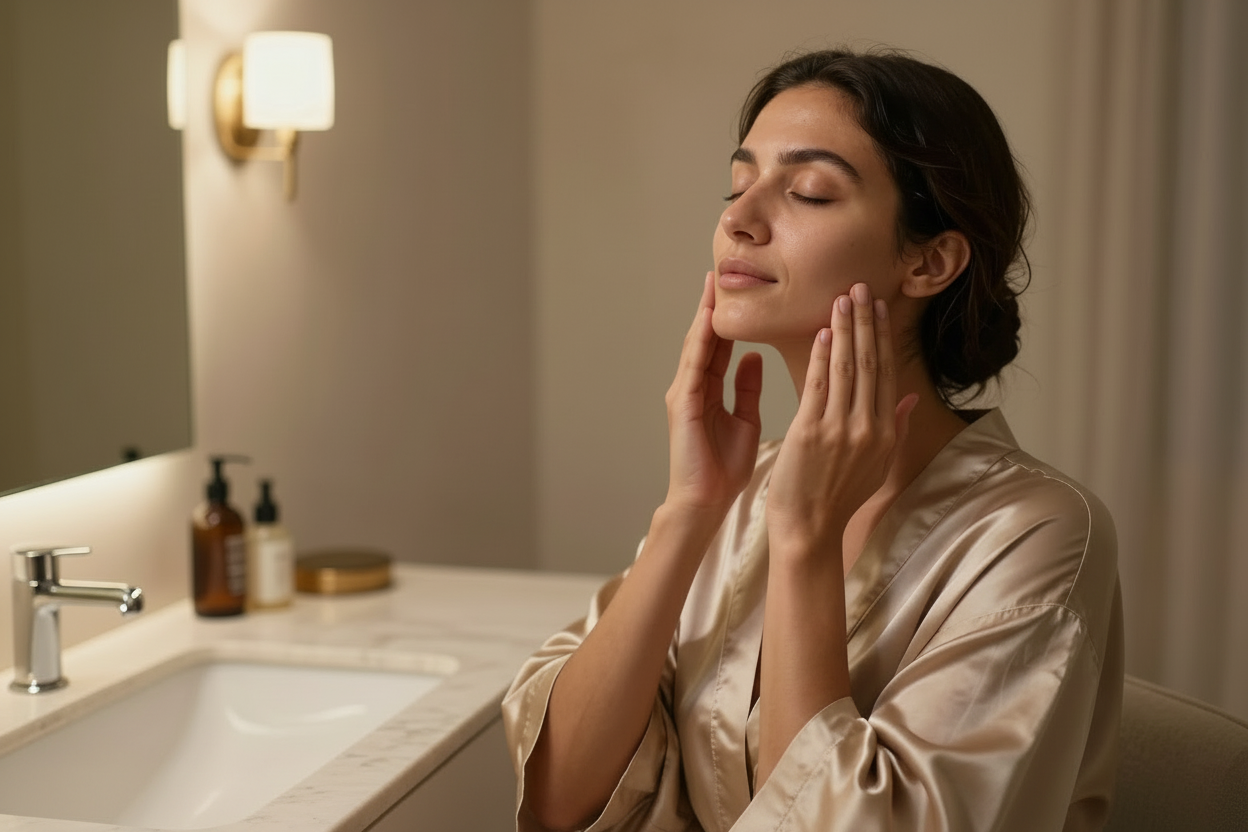
Lymphatic Drainage Face Massage to De-Puff Overnight
Waking up with a swollen face is rarely about what the scale says. It is almost never fat. It is fluid: a night's worth of lymph that had nowhere to go, pooling quietly along your jaw and under your eyes while you slept. A lymphatic face massage is the fastest, cheapest way to move it back out, and the ritual itself does more for you than the mirror alone will show.
This is not a new trend dressed up in a new name. It is a slow-moving system in your body finally getting the help it was always designed to need, your hands, doing a job gravity and stillness cannot do alone.
What Is Lymphatic Drainage, Really?
Your lymphatic system is a second circulatory network running alongside your blood vessels, carrying a clear fluid called lymph that picks up cellular waste, excess protein, and fluid from your tissues and ferries it toward lymph nodes to be filtered and cleared. Unlike your heart, which pumps blood on its own schedule, the lymphatic system has no central pump of its own. It relies entirely on outside help: muscle contraction, deep breathing, and manual pressure to keep moving.
Your face has an unusually dense network of lymph nodes just below the jaw, in front of the ears, and along the sides of the neck, but very little muscle movement to push fluid toward them naturally. Combine that with lying flat for eight hours, a salty dinner, a glass of wine, or a stretch of poor sleep, and fluid simply sits there until something moves it. That something is usually a facial massage, since your face rarely gets the incidental movement your legs get just from walking around all day.
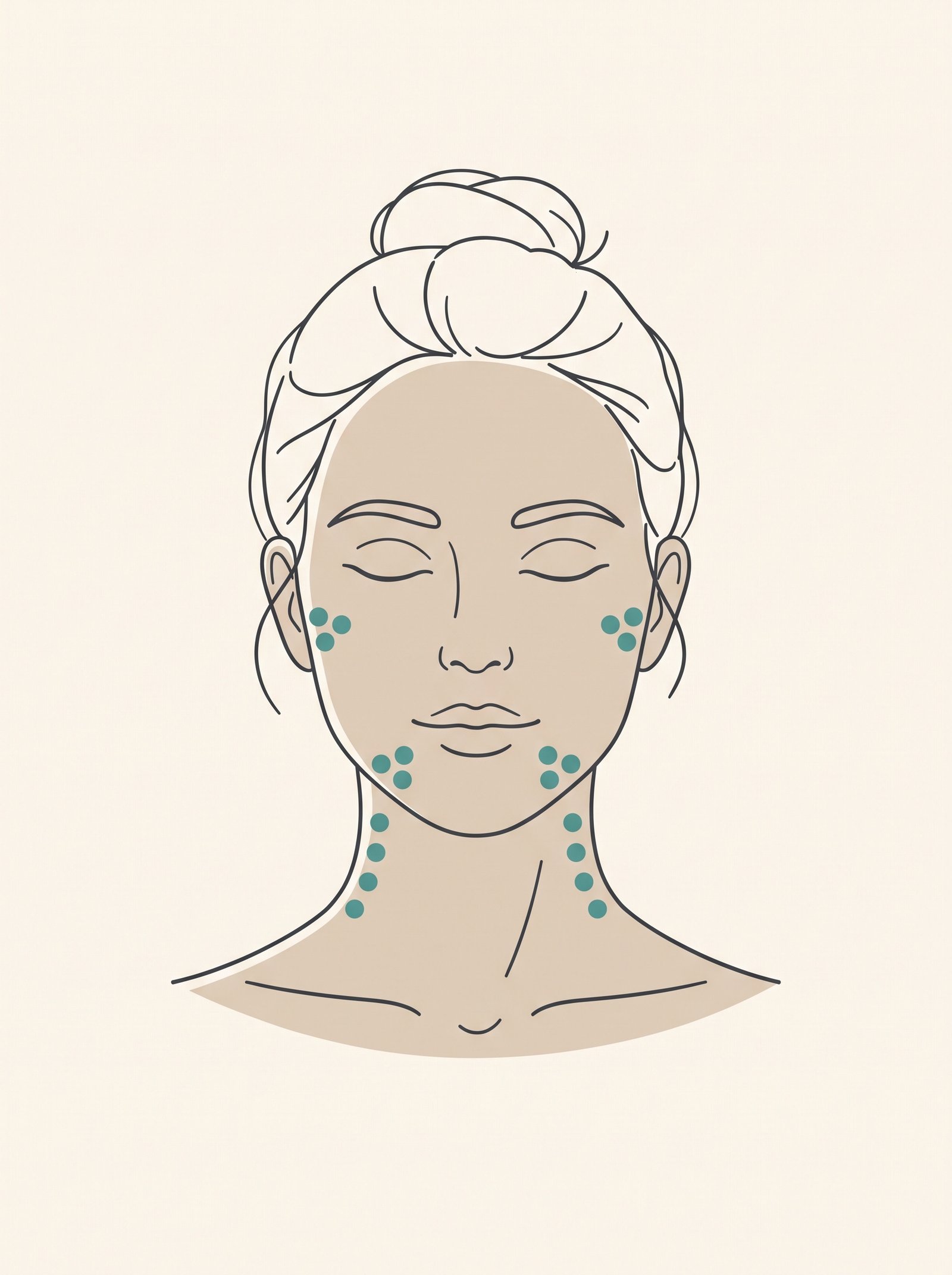
This is worth separating from a myth that tends to travel alongside it: lymphatic massage does not "flush toxins" in the dramatic sense the phrase implies. What it genuinely does is mechanical: it encourages fluid that has pooled in tissue to move back into vessels built to carry it away, the same basic physics behind elevating a swollen ankle. The result looks similar to detoxing from the outside, less puffy, more defined, but the honest mechanism is fluid dynamics, not elimination of anything toxic.
Signs Your Lymph Needs Help
A congested lymphatic system does not always announce itself loudly. Morning puffiness around the eyes and jawline is the most obvious sign, but a few quieter ones are just as telling: skin that looks dull or slightly gray despite a decent skincare routine, tension headaches that seem to start at the base of the skull, and a jaw that feels tight or achy, especially if you clench at night. None of these are dangerous on their own, but together they are a fairly reliable signal that fluid and tension have built up faster than your body is clearing them. Chronic stress compounds all of this directly, since sustained cortisol elevation has been shown to impair normal lymphatic vessel function, which is part of why the puffiest mornings often follow the most stressful weeks rather than the saltiest dinners.
The 5-Minute Nightly Ritual
Order matters here more than pressure. The goal is always to clear the drainage pathway before you try to move fluid into it, working from the neck outward and inward toward the nodes, never the other way around.
1. Prep With Clean Skin and Slip
- Cleanse first.
- Then apply a facial oil or balm generously, enough that your fingers glide without dragging or tugging the skin.
Slip is not optional here; massaging dry skin creates friction that irritates rather than drains, and can leave redness that has nothing to do with actual progress.
2. Clear the Neck First
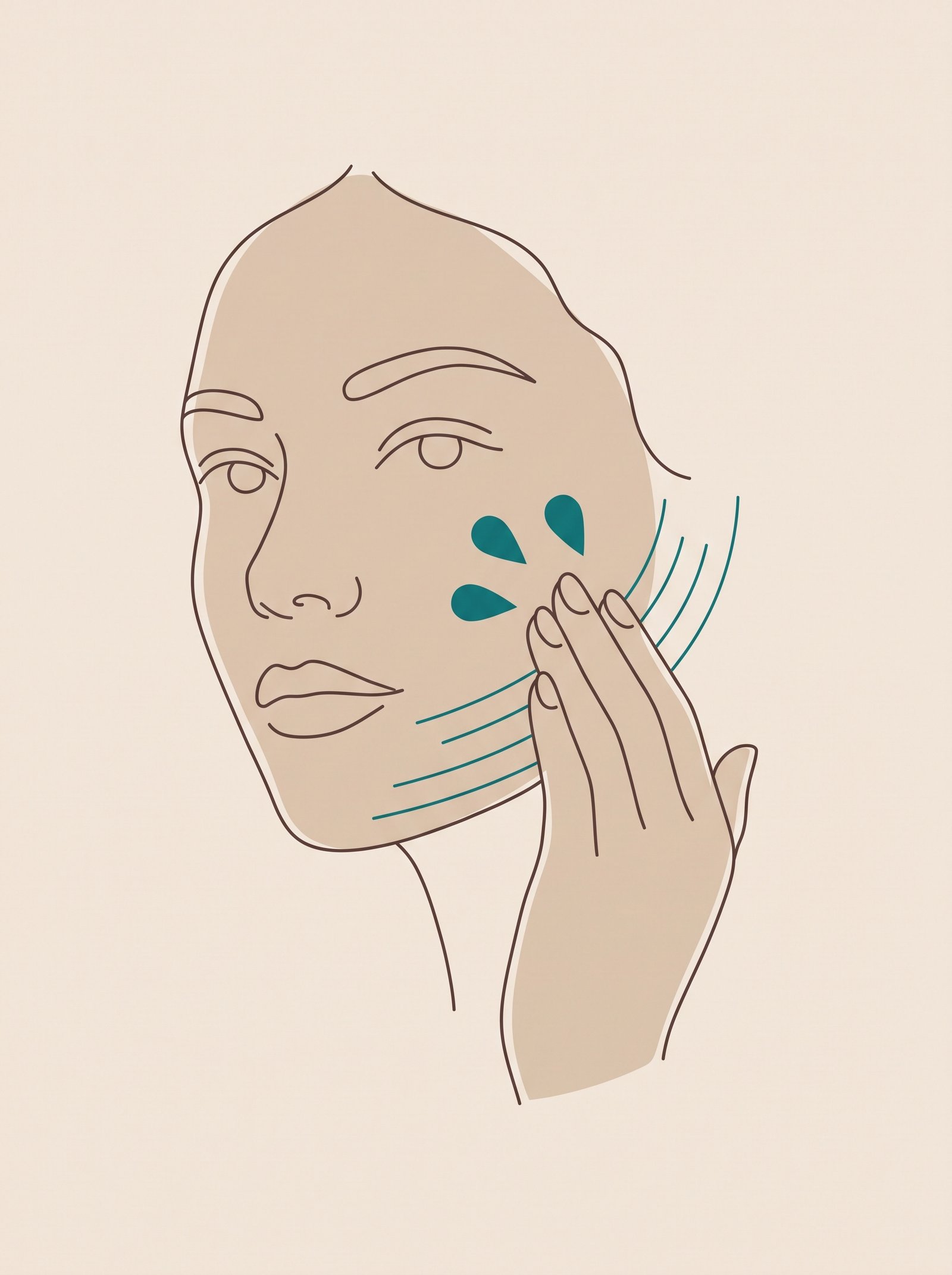
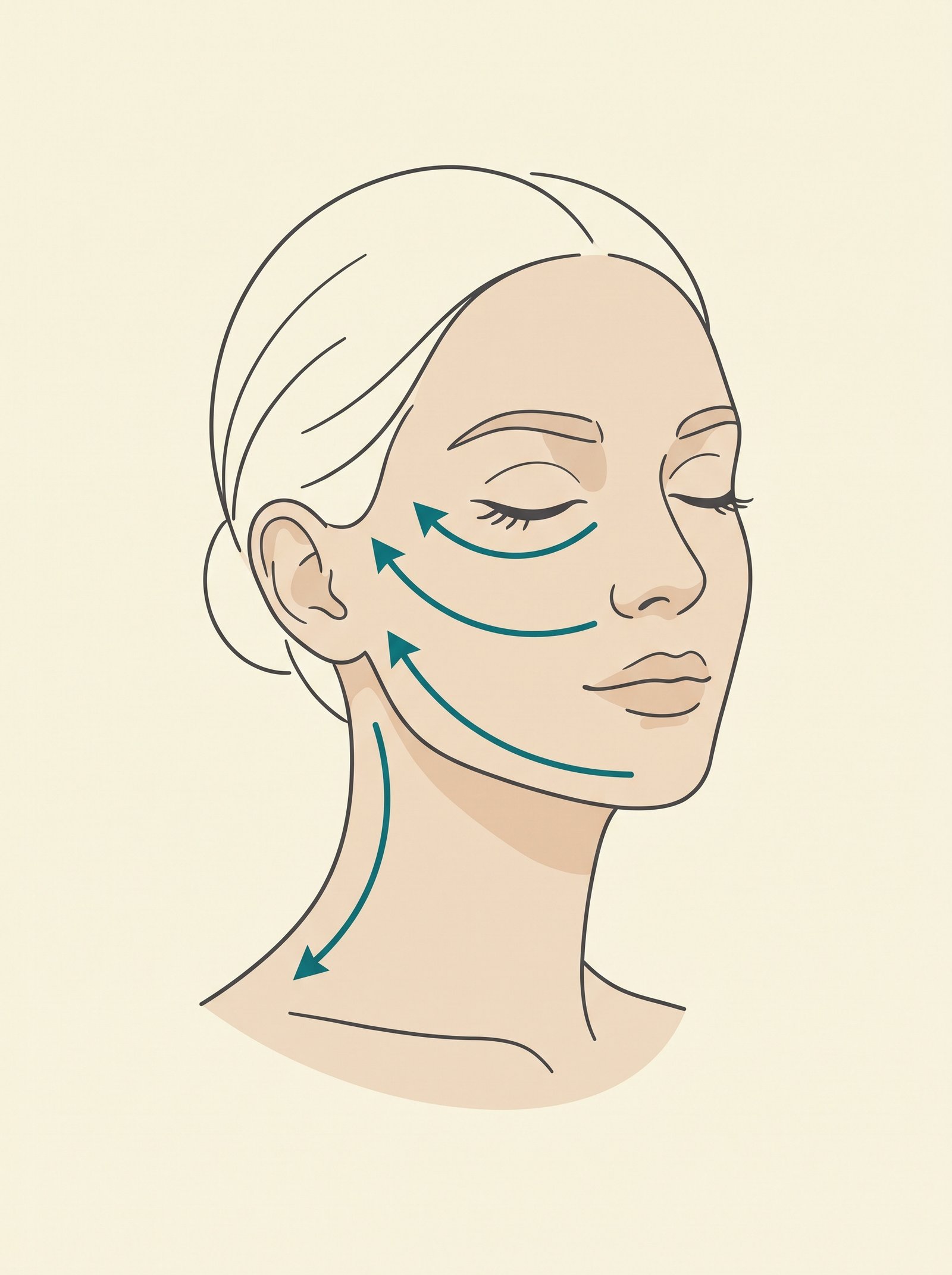
- Before touching your face at all, sweep both hands in gentle downward strokes along the sides of your neck, from just under the ears down to the collarbone, five to eight times per side.
- This step is the one people skip and the one that matters most: it opens the main drainage pathway so that fluid you move from your face later actually has somewhere to go, rather than backing up right where it started.
3. Work Face to Nodes
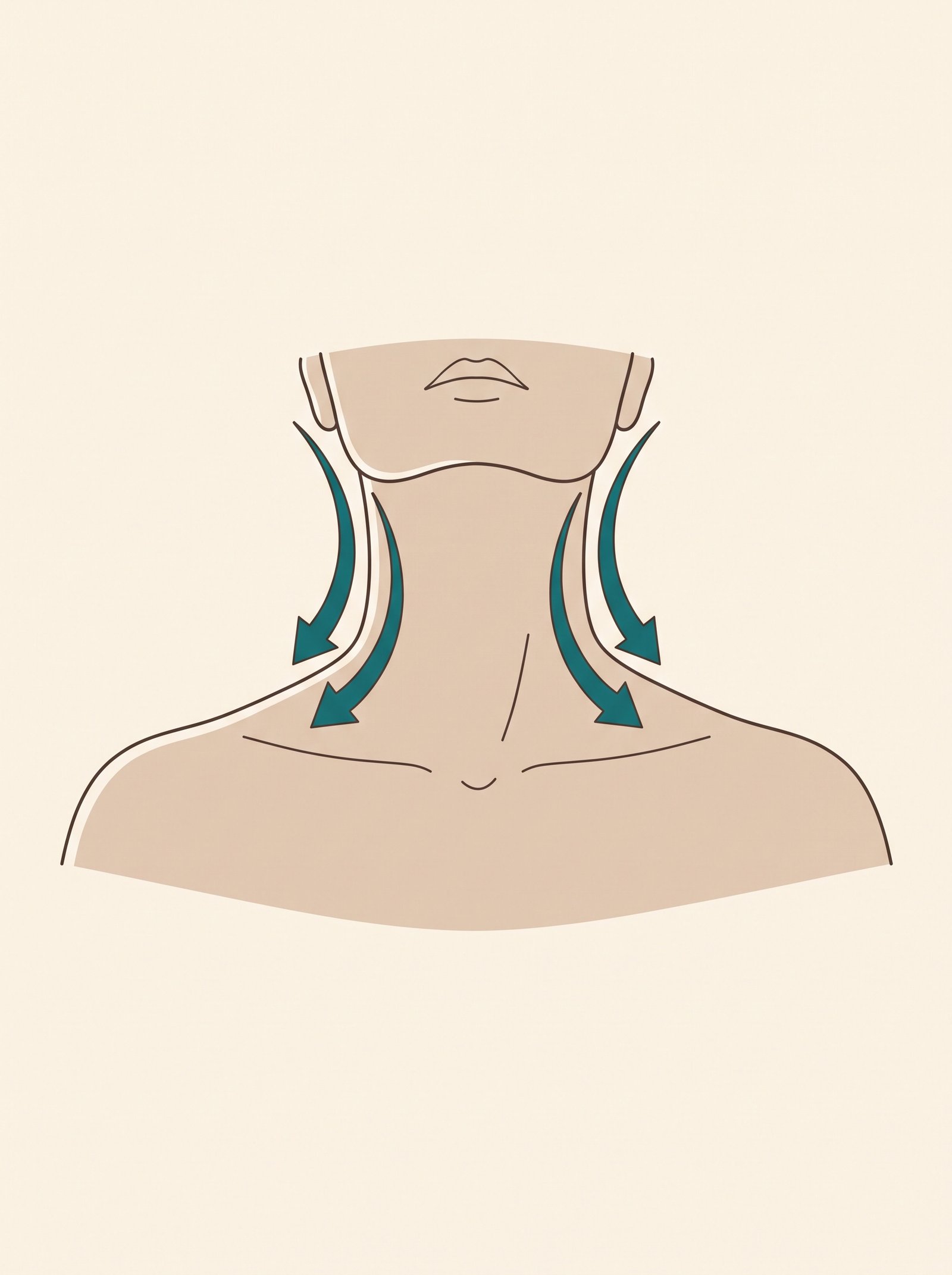
- Jawline to ears: sweeping along the bone from chin to earlobe.
- Cheeks to temples: gliding upward and outward from the sides of the nose.
- Under-eyes to temples: using your ring finger's lightest possible pressure, moving from the inner corner outward, never dragging downward or tugging the thin skin there.
Repeat each pathway five to six times.
4. Finish With Pressure-Point Holds
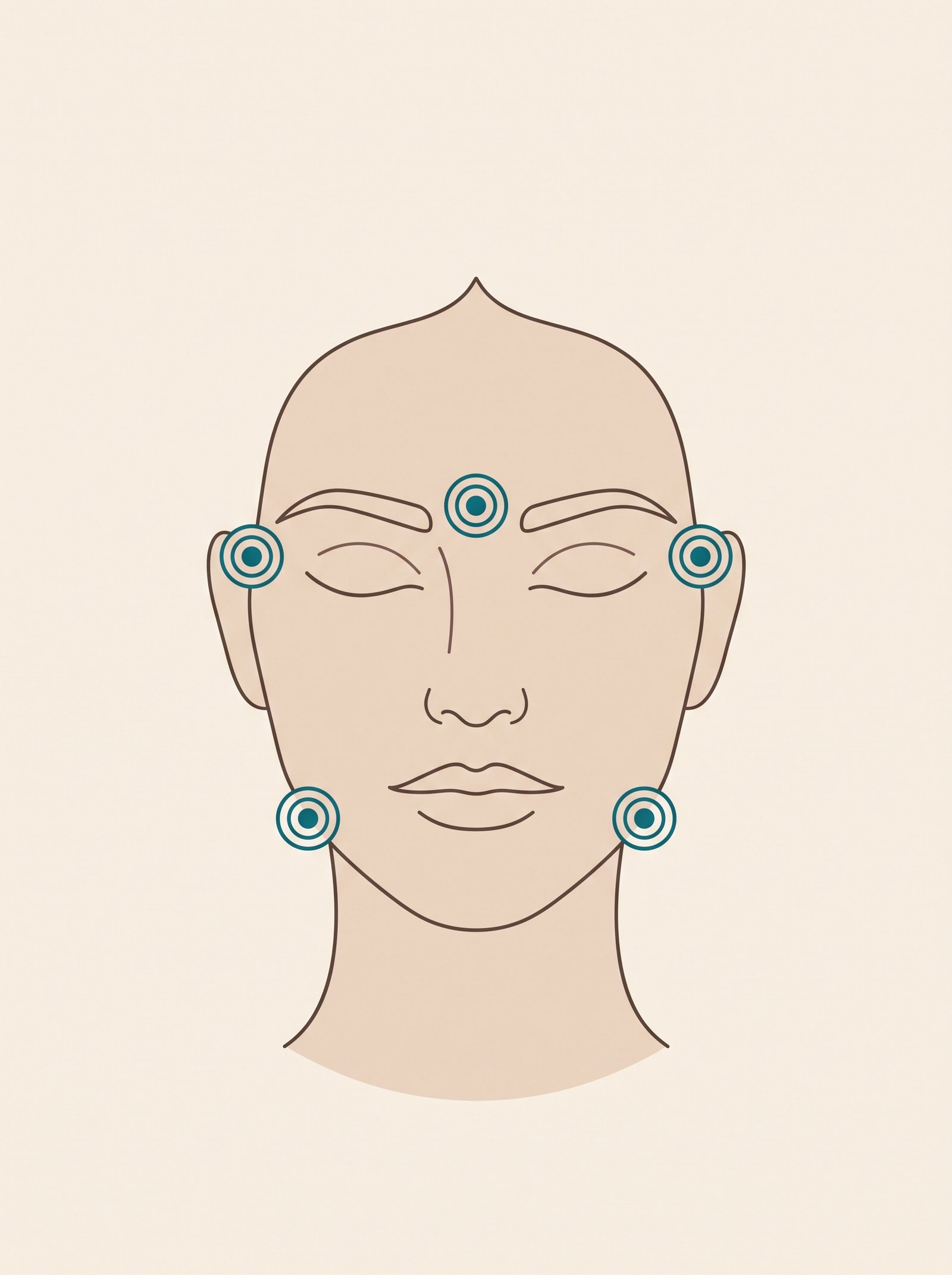
- Close with three still holds, about ten seconds each: gentle pressure at the temples, between the eyebrows, and at the jaw hinge where you feel the most clenching.
- This is also where the ritual starts doing more than de-puffing. Slow, sustained pressure combined with the rhythmic strokes before it has been shown to shift the body toward parasympathetic, rest-and-digest activity, the same state your nervous system needs to actually let go of tension it has been holding all day (Diego & Field, 2009).
- A congested face is very often a tense one; releasing both together is the real reason this ritual feels so different from a quick massage.
Choosing Your Tool: Hands, Gua Sha, or Cold Spoon
Ranked from easiest to most involved, all three genuinely work; the right one is whichever you will actually do every night.
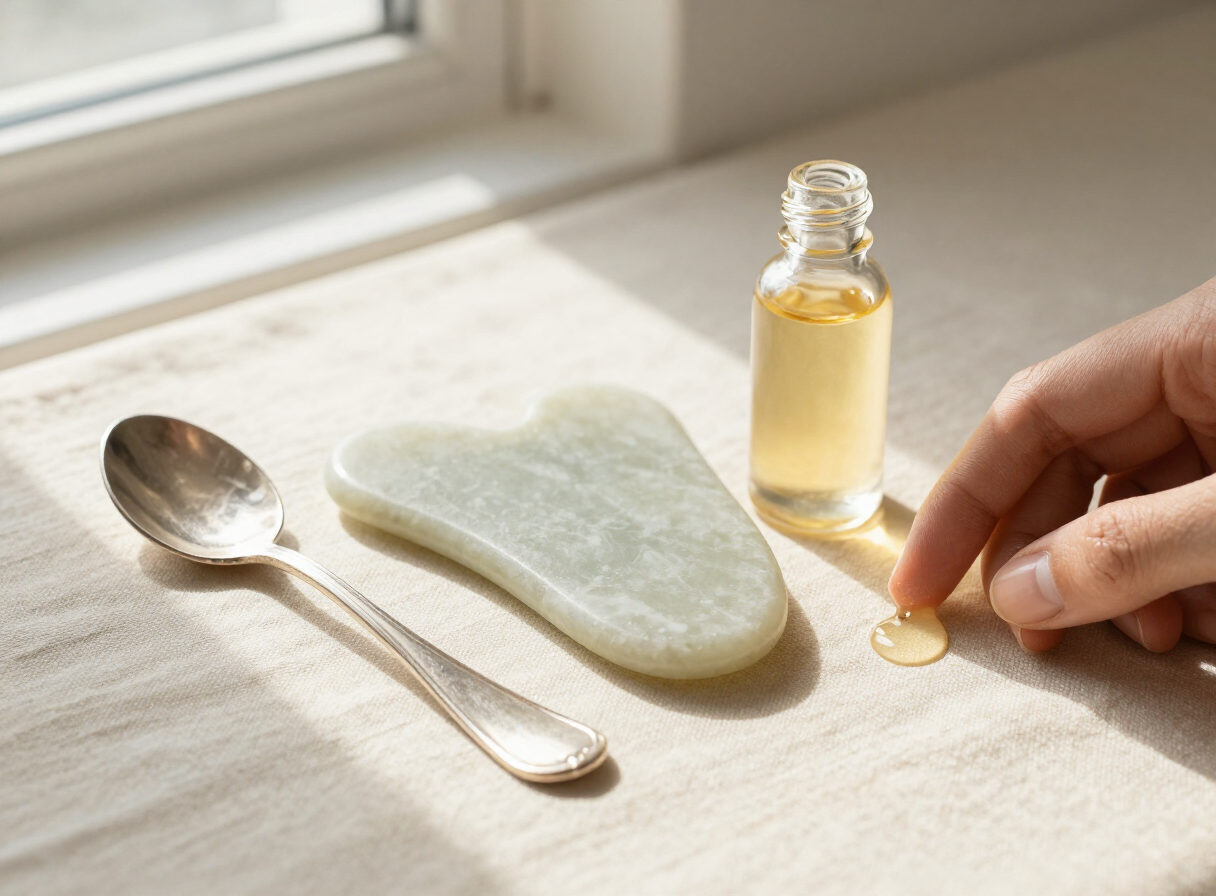
- Hands, easiest. No tool to clean, no technique to learn beyond direction and pressure. Slightly less precise along the jaw and temples than a tool, but perfectly effective for the neck and cheeks, and the only option that lets you feel exactly how much pressure you are using.
- Gua sha, moderate. A flat stone tool that adds gentle, consistent pressure and covers broader areas of the jaw and cheek in fewer strokes. Worth the small learning curve if puffiness is concentrated along the jawline specifically.
- Cold spoon, most involved. A metal spoon chilled in the freezer for ten minutes adds a vasoconstriction effect on top of the manual drainage, similar in principle to ice rolling, which tightens the look of puffiness immediately while the massage clears it more gradually underneath. Best saved for mornings when you need a faster visible result, since the cold sensation makes a slow, careful ritual harder to sustain at night.
What to Expect
The de-puffing is immediate, you will usually see a visible difference in under five minutes, which is part of why this ritual is so satisfying compared to most skincare steps that ask you to wait weeks for proof. The longer-term changes take more patience: several weeks of consistent nightly practice tend to bring a subtly more defined jawline and contour, not because the massage reshapes anything, but because it is no longer masked by daily fluid retention. The tension relief tends to land somewhere in between, noticeable within the first week for most people, especially around the jaw hinge if clenching has been part of the problem.

When to Skip This
Skip the massage entirely over active acne breakouts, since manual pressure can spread the bacteria responsible for them to nearby follicles. Avoid it on sunburned skin, which is already inflamed and does not need added friction. And hold off during a rosacea flare, when blood vessels are already dilated and reactive; gentle lymphatic work can help rosacea-prone skin on calm days, but a flare is not that day. When in doubt, wait for the skin to calm down first, then resume.
Frequently Asked Questions
Does lymphatic face massage actually work, or is it just marketing?
The de-puffing effect is real and immediate; manual pressure genuinely moves fluid. The cosmetic research specific to facial massage is thinner than the medical research on lymphatic drainage for conditions like lymphedema, so treat the visible results as real but temporary, not a permanent contour change.
How often should I do this?
Nightly gives the most consistent results, but even three to four times a week noticeably reduces morning puffiness for most people.
Can I do this in the morning instead of at night?
Yes, especially if you want the immediate de-puffing before makeup. Just skip the deep pressure-point holds if you are short on time; the neck and face strokes alone still help.
Do I need a special oil?
No. Any facial oil or a rich, slippery balm works; the slip matters more than the specific ingredients.
Why does my jaw hurt more some mornings than others?
Stress and poor sleep both increase nighttime jaw clenching, which tightens the muscles the massage is designed to release. If it is a daily, significant pain, it is worth mentioning to a dentist or doctor rather than massaging through it indefinitely.
Is facial massage safe if I have a skin barrier that already feels sensitive?
Go gentler and shorter, and consider pairing it with the days your skin barrier is calm rather than actively reactive, since friction on a compromised barrier can add irritation rather than relief.
Can this help with tension headaches, or just puffiness?
Both, genuinely. The neck-clearing strokes and pressure-point holds target many of the same muscles involved in tension headaches that start at the base of the skull, so a reduction in headache frequency is a commonly reported side benefit, not the primary goal.
None of this requires believing in anything mystical about toxins leaving your body. It requires believing that a slow-moving fluid system responds to movement, and that five minutes of unhurried touch before bed is one of the few self-care rituals that shows you proof by morning and asks almost nothing of you in return.
Explore more glow rituals and nervous-system-friendly self-care at healzenglow.com/glow.