
Antioxidant Skincare: A Simple Daily Routine to Stop Skin Oxidation
Skin oxidation browns your skin the same way a cut apple browns in the open air. Here's why it happens, the signs to watch for, and the simple 3-step antioxidant routine that actually stops it.
In this guide:
- What skin oxidation actually is
- The signs of oxidative stress on your skin
- What causes skin oxidation
- The 3-step morning antioxidant shield
- The right order to apply vitamin C serum
- Niacinamide vs vitamin C, and common serum mistakes
- Antioxidant support from within, and nighttime repair
What Skin Oxidation Actually Is
Cut an apple in half and leave it on the counter. Within minutes the pale flesh starts to darken, then brown, then look tired and dull. That browning is oxidation, the same chemical process that is quietly happening to your skin every single day. When the flesh of an apple is exposed to the air, unstable molecules called free radicals steal electrons from the apple's cells, and that theft is what turns it brown. Your skin is made of the same kind of vulnerable cells, and it is exposed to the same kind of electron-stealing attack from UV light, pollution, smoke, and even the energy your own cells produce just to keep you alive.
Free radicals are molecules missing an electron, which makes them unstable and reactive. To stabilise themselves, they snatch an electron from a healthy neighbouring cell, and that cell then becomes a free radical itself, setting off a chain reaction. This is oxidative stress: the point at which free radicals outnumber your skin's ability to neutralise them. The damage accumulates in the collagen and elastin that keep your skin firm, in the melanin-producing cells that control your tone, and in the lipids that hold your skin barrier together. Left unchecked, oxidative stress is one of the main drivers of premature ageing, the dullness, the dark spots, the fine lines that appear years before they should.

The Signs of Oxidative Stress on Your Skin
Oxidative stress rarely shows up as one dramatic event. It shows up as a slow drift, the kind you only notice when you compare a photo from two years ago to today. Your skin doesn't suddenly look old; it quietly loses something. These are the signs that oxidative stress is outpacing your skin's defences:
- Dullness and a loss of that lit-from-within radiance, even right after cleansing
- Uneven tone and patchiness, especially across the cheeks and jawline
- Dark spots and hyperpigmentation that appear without a clear cause
- Fine lines that show up earlier than they should, particularly around the eyes and mouth
- A loss of firmness and bounce, as collagen and elastin take daily damage
- Increased sensitivity, redness, and a weakened skin barrier that no longer holds moisture the way it used to
What Causes Skin Oxidation
The biggest single driver is ultraviolet radiation from the sun, which generates free radicals in the skin within seconds of exposure, even on cloudy days and even through windows. Pollution is the second major offender: airborne particles and smog settle on the skin and trigger oxidative reactions that degrade the barrier. Add to that cigarette smoke, poor sleep, chronic stress, a diet low in antioxidants and high in processed sugar, and even the infrared heat from everyday devices, and you have a constant daily load of free radicals your skin has to neutralise. The good news is that the same way oxidation can be slowed in a kitchen, by adding a squeeze of lemon juice to that cut apple, it can be slowed on your skin by giving it antioxidants to donate those missing electrons instead of letting your cells do it.
The 3-Step Morning Antioxidant Shield
You do not need a ten-step routine to stop skin oxidation. You need three steps, done in the morning, in the right order, every day. The morning is when it matters most, because that is when you are about to walk out into the UV and pollution that generate the free radicals in the first place. Think of this as a shield you put on before the attack, not a repair you attempt after it.
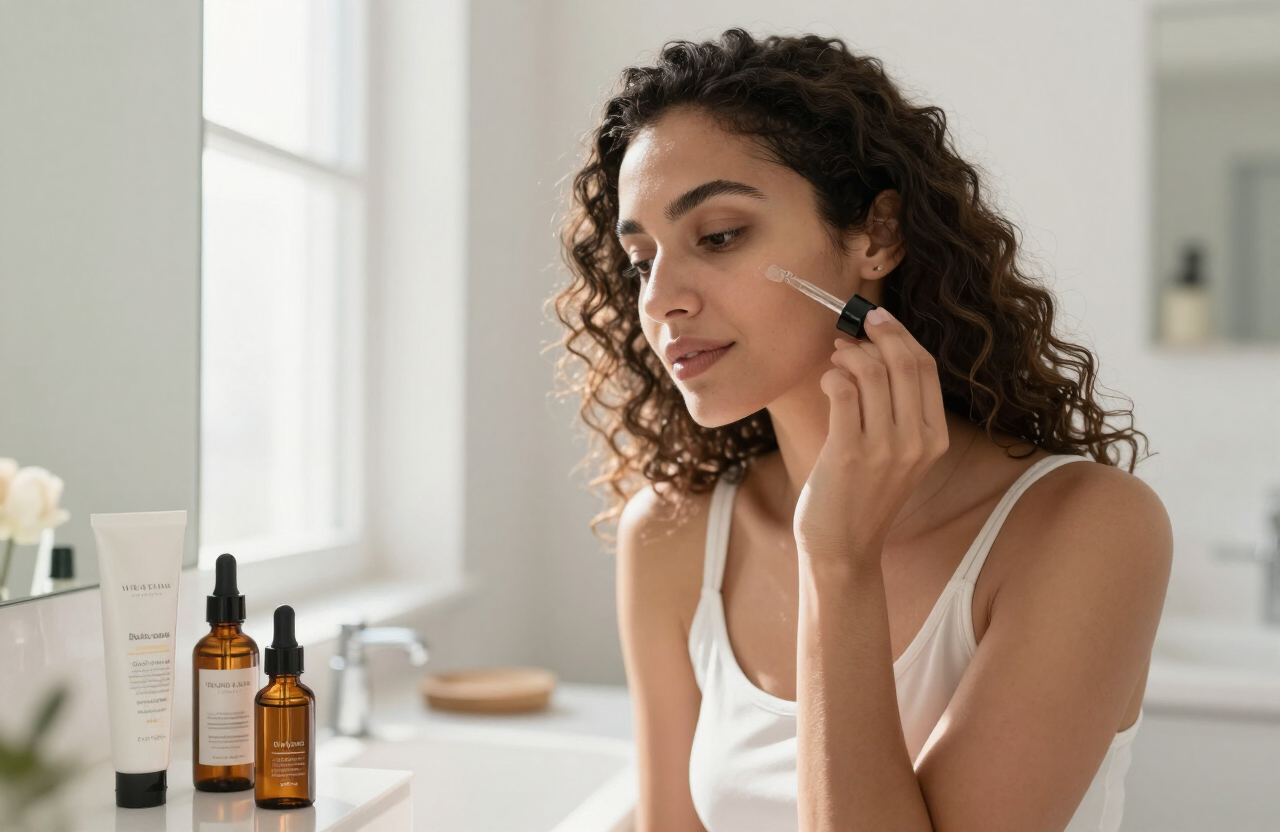
- 1Vitamin C serum — After cleansing, while your skin is still slightly damp, apply 3 to 5 drops of a vitamin C serum (look for L-ascorbic acid at 10 to 20 percent). Vitamin C is the workhorse antioxidant: it neutralises free radicals on contact, brightens existing dark spots, and boosts the protection you get from the sunscreen you apply next.
- 2Moisturiser to seal the barrier — Follow with a moisturiser suited to your skin type. This step matters more than people think, because a compromised barrier lets free radicals in more easily. A healthy, well-hydrated barrier is itself a line of antioxidant defence.
- 3Sunscreen, every single morning — Finish with a broad-spectrum SPF 30 or higher. Sunscreen is not optional and not interchangeable with vitamin C, the two work together. Vitamin C neutralises the free radicals that UV generates, while sunscreen blocks the UV from reaching your skin in the first place. Skip the sunscreen and you are undoing the first two steps before lunch.
The Order Matters: How to Apply Vitamin C Serum
Apply your products from thinnest to thickest, because a heavier product applied first will block a lighter one from reaching the skin. That means: cleanse, then vitamin C serum (the thinnest, water-based layer), then moisturiser (thicker), then sunscreen (the final protective layer). Give the serum a few seconds to absorb before layering the next product on top. Vitamin C belongs in the morning routine specifically, because its job is to stand between your skin and the free radicals the daytime generates. At night, you can let other actives take over.
Niacinamide vs Vitamin C: What's the Difference
Both are antioxidants, but they work differently and they are not in competition. Vitamin C (L-ascorbic acid) is the more potent free-radical neutraliser and the better choice for brightening dark spots and boosting sunscreen. Niacinamide (vitamin B3) is gentler, more stable, and excels at strengthening the barrier, reducing redness, and regulating oil. They can actually be used together, niacinamide in the morning under or mixed with your vitamin C, or niacinamide in the evening while vitamin C takes the morning shift. If your skin is sensitive and reacts to acidic vitamin C, niacinamide is the easier entry point. If your main goal is brightening and antioxidant defence against UV, vitamin C is the one to prioritise.
Common Vitamin C Serum Mistakes
- Using a formula that has already oxidised, if your serum has turned dark brown or orange, it has oxidised and is no longer effective. Toss it.
- Applying too much, more is not better. Three to five drops are enough for the whole face; excess can cause irritation without extra benefit.
- Skipping sunscreen, vitamin C boosts your SPF but does not replace it. Without sunscreen, UV generates more free radicals than the serum can neutralise.
- Storing it badly, light and air degrade vitamin C fast. Keep the bottle tightly closed, in a cool, dark place, never on a sunny windowsill.
- Mixing it with the wrong actives at the same time, avoid layering vitamin C directly over retinol or strong exfoliating acids in one sitting, as this can irritate the barrier.
How to Keep Your Vitamin C Serum Effective
Vitamin C is notoriously unstable, which is exactly why so many serums fail before the bottle is finished. Buy in dark or opaque packaging, ideally an airless pump rather than a dropper that lets air in every time you open it. Choose a formula in the right pH range, around 3.5 for L-ascorbic acid, since a higher pH makes it far less effective. Store it somewhere cool and dark, and watch the colour: a fresh serum is clear to pale straw. Once it turns amber, then brown, it has oxidised and is doing nothing for your skin. Buying smaller bottles you finish within a couple of months is smarter than a large bottle that goes bad halfway through.
Antioxidant Support from Within
What you put on your skin is only half the shield. Your body also produces its own internal antioxidants, glutathione, superoxide dismutase, catalase, and it draws on the antioxidants in your food to fuel them. A diet rich in colourful plant foods gives your skin a reserve to draw on when the external load of free radicals is high. Prioritise berries, pomegranate, citrus, leafy greens, tomatoes, nuts, green tea, and dark chocolate, and drink enough water, since dehydrated skin is more vulnerable to oxidative damage. You cannot out-serum a diet that is starving your skin of the building blocks it needs to defend itself.

Nighttime Skin Repair
While the morning routine is about defence, the evening routine is about repair. Overnight, your skin shifts into recovery mode, increasing cell turnover and repairing the damage accumulated during the day. Cleanse thoroughly to remove the pollution particles and sunscreen that have been sitting on your skin, then support repair with a nourishing night serum or facial oil and a richer moisturiser. If your skin tolerates it, this is also the window for retinol, which works synergistically with your morning vitamin C, the vitamin C defends by day, the retinol repairs and stimulates collagen by night. Together they address oxidative damage from both sides, which is far more effective than either one alone.

Frequently Asked Questions
Can I really stop skin oxidation, or just slow it down?
You cannot stop it entirely, because free radicals are produced even by your own cells' normal energy output. But you can dramatically reduce the external load and give your skin the antioxidants it needs to neutralise what remains. A consistent vitamin C and sunscreen routine meaningfully slows oxidative damage and its visible effects.
Do I need vitamin C if I already wear sunscreen?
Yes, and they work best together. Sunscreen blocks much of the UV from reaching your skin, but no sunscreen blocks 100 percent, and the UV that gets through still generates free radicals. Vitamin C neutralises those free radicals, which is why studies show the combination gives better protection than sunscreen alone.
How long until I see results from an antioxidant routine?
Brightening and a more even tone typically show within 4 to 12 weeks of daily use. The protective, anti-ageing benefits are cumulative and preventative, meaning they show up as skin that ages more slowly over the coming years rather than as an overnight transformation.
Is it safe to use vitamin C and niacinamide together?
Yes. The old claim that they cancel each other out has been debunked. They are stable together and can even complement each other, vitamin C for brightening and antioxidant defence, niacinamide for barrier strength and calming redness.
My vitamin C serum has turned brown. Is it still okay to use?
No. A dark brown or orange colour means the vitamin C has oxidised and lost its effectiveness. Using it will not harm you, but it will not deliver the antioxidant benefits you are applying it for. Replace it, and store the next bottle in a cool, dark place.
Can I use retinol and vitamin C in the same routine?
It is best to separate them by time: vitamin C in the morning, retinol at night. Layering them directly in one sitting can irritate the barrier for many skin types. Splitting them into a day-and-night pairing is both gentler and more effective.
Does diet really affect skin oxidation?
Yes. Your skin relies on internal antioxidants, which it builds from the nutrients in your food. A diet rich in colourful fruits, vegetables, green tea, and healthy fats gives your skin a reserve to draw on, while a diet high in processed sugar and low in antioxidants increases oxidative stress from the inside out.
The Bottom Line
Skin oxidation is not a mystery or a marketing invention. It is the same browning that happens to a cut apple, and it is happening to your skin every day, driven by UV, pollution, and the normal wear of living. The fix is not complicated: a 3-step morning shield of vitamin C serum, moisturiser, and sunscreen, supported by antioxidant-rich food and a repair-focused evening routine. You do not need everything, you need the right three things, done consistently, in the right order. That is what actually stops oxidation in its tracks.
Explore more on our Glow pillar at healzenglow.com/glow.
References
This article draws on the following peer-reviewed research on skin oxidation, free radicals, vitamin C, and photoaging:
- Pullar, J.M., Carr, A.C., & Vissers, M.C. (2017). The Roles of Vitamin C in Skin Health. Nutrients, 9(8), 866.
- Shindo, Y., Witt, E., Han, D., & Packer, L. (1994). Dose-response effects of acute ultraviolet irradiation on antioxidants and antioxidant enzymes in human skin. Journal of Investigative Dermatology, 102(4), 470-475.
- Darr, D., Dunston, S., Faust, H., & Pinnell, S. (1992). Effectiveness of antioxidants (vitamin C and E) with and without sunscreens as topical photoprotectants. Acta Dermato-Venereologica, 72(4), 262-264.
- Krutmann, J., Bouloc, A., Sore, G., Bernard, B.A., & Passeron, T. (2017). Pollution and skin: From epidemiological and mechanistic studies to clinical implications. Journal of Dermatological Science, 86(2), 77-83.