
The Ultimate Guide to Hair Oils for Hair Growth (2026)
Which hair oils actually support growth in 2026 — the real science on rosemary, castor, and jojoba oil, how to use them without weighing hair down, and the realistic timeline for results.
Long, healthy hair rarely happens by accident, and in 2026 more of us are reaching past expensive treatments for something simpler: the right oil, used the right way. Hair oil won't make strands grow faster than your biology allows, nothing applied topically can do that, but the right blend changes the environment your hair grows in. It calms an irritated scalp, seals moisture into the shaft, and cuts down on the breakage that makes hair look stuck at the same length for years. This guide walks through which oils the research actually supports, how much and how often to use them, and the realistic timeline for seeing a difference.
In this guide:
- What hair oil can and can't do for growth
- The five oils worth having in your cabinet
- A weekly routine that won't weigh hair down
- Three mistakes that quietly undo your progress
- How long to wait before judging results
- Building oils into a full hair-care routine
What Hair Oil Can (and Can't) Do for Growth
No oil changes the rate at which a follicle produces new hair, that's set by genetics, hormones, and overall health. What oil can influence is everything around that process. Rosemary oil, for instance, acts as a mild vasodilator: it increases blood flow to the scalp, and better circulation means follicles receive more of the oxygen and nutrients they need to stay in their active growing phase rather than shedding early. A widely cited 2022 review in the journal Dermatologic Therapy found reasonable evidence for rosemary oil, alongside caffeine and pumpkin seed oil, in supporting hair growth outcomes.
Castor oil works through a completely different mechanism. It's rich in ricinoleic acid and doesn't stimulate the follicle directly, instead it forms a protective layer that seals moisture into the hair shaft, reduces friction, and prevents the kind of breakage that makes hair look thin even when plenty of it is still growing. Put a circulation-boosting oil and a moisture-sealing oil together, and you're covering both sides of the growth equation: what happens at the root, and what happens to the strand once it's out.
The Five Oils Worth Having in Your Cabinet
Not every oil earns a place in a growth-focused routine. These five come up again and again in dermatology-adjacent research and in the routines of people who've actually tracked results over months, not days.
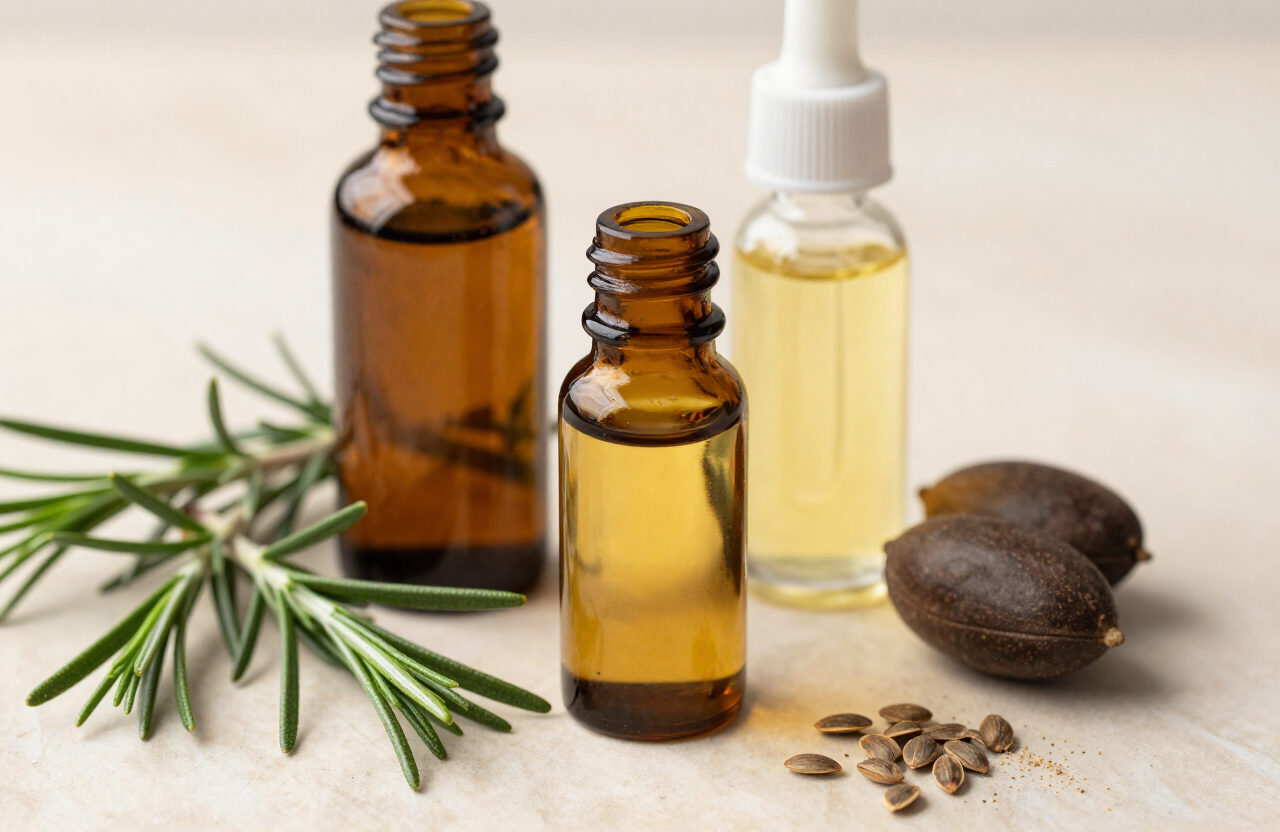
- Rosemary oil: the circulation booster. Always dilute it in a carrier oil before it touches your scalp; used undiluted, it can irritate sensitive skin.
- Castor oil: thick, occlusive, and excellent at sealing ends. A little goes a long way, so start with a dime-sized amount.
- Jojoba oil: chemically similar to your scalp's natural sebum, which makes it the best choice for fine or oily hair that other oils weigh down.
- Argan oil: lightweight and rich in vitamin E, good for smoothing frizz and flyaways without leaving buildup.
- Pumpkin seed oil: less well known, but the same 2022 review that credits rosemary also names pumpkin seed oil as a promising growth-supportive ingredient, likely through its effect on hormone-related thinning.
A Weekly Routine That Won't Weigh Hair Down
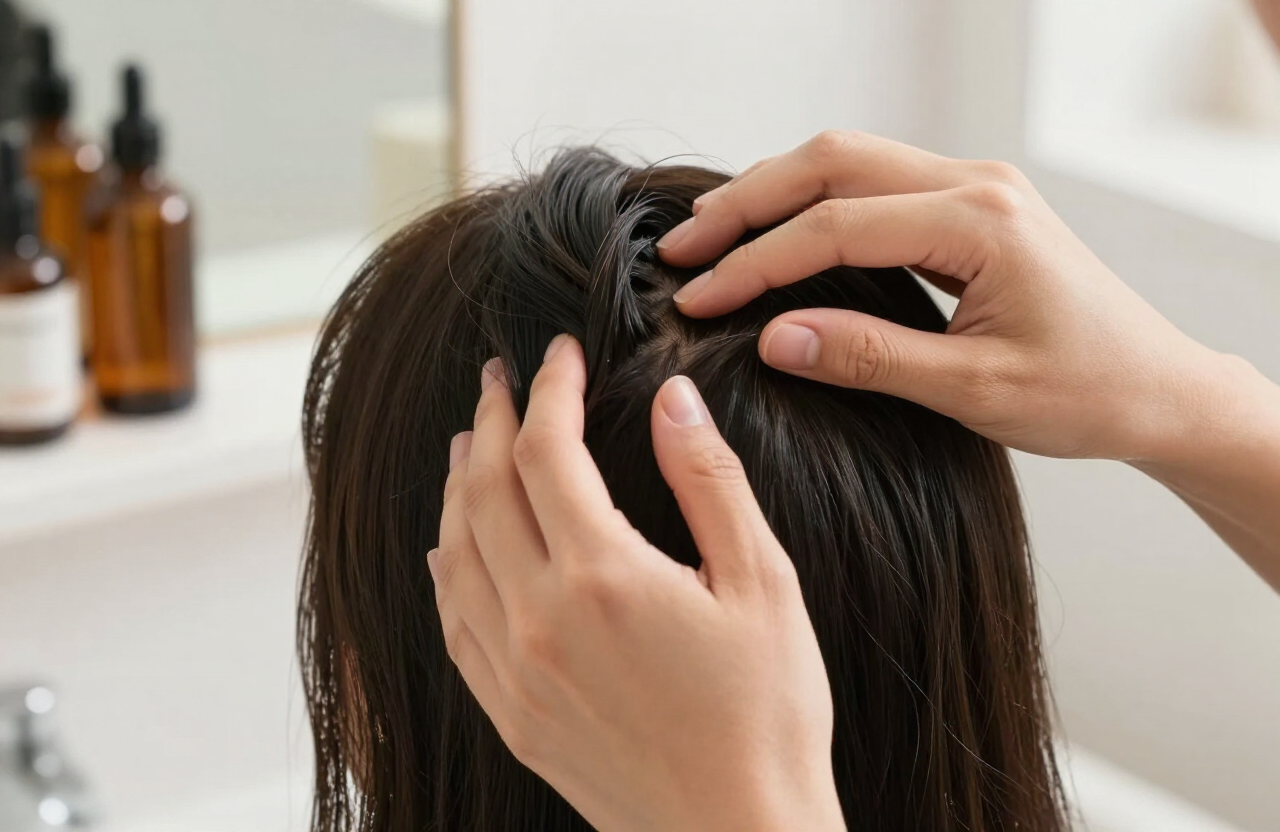
Consistency matters more than quantity, and more oil isn't more effective, it's usually just greasier. A realistic weekly routine looks like this: twice a week, part your hair into sections and massage a diluted rosemary-and-castor blend directly into the scalp for two to three minutes. The massage itself adds a second circulation boost on top of whatever the oil provides. Leave it on for at least thirty minutes, or overnight under a silk cap for deeper conditioning, then shampoo it out thoroughly, oil left to build up on the scalp can clog follicles rather than help them.
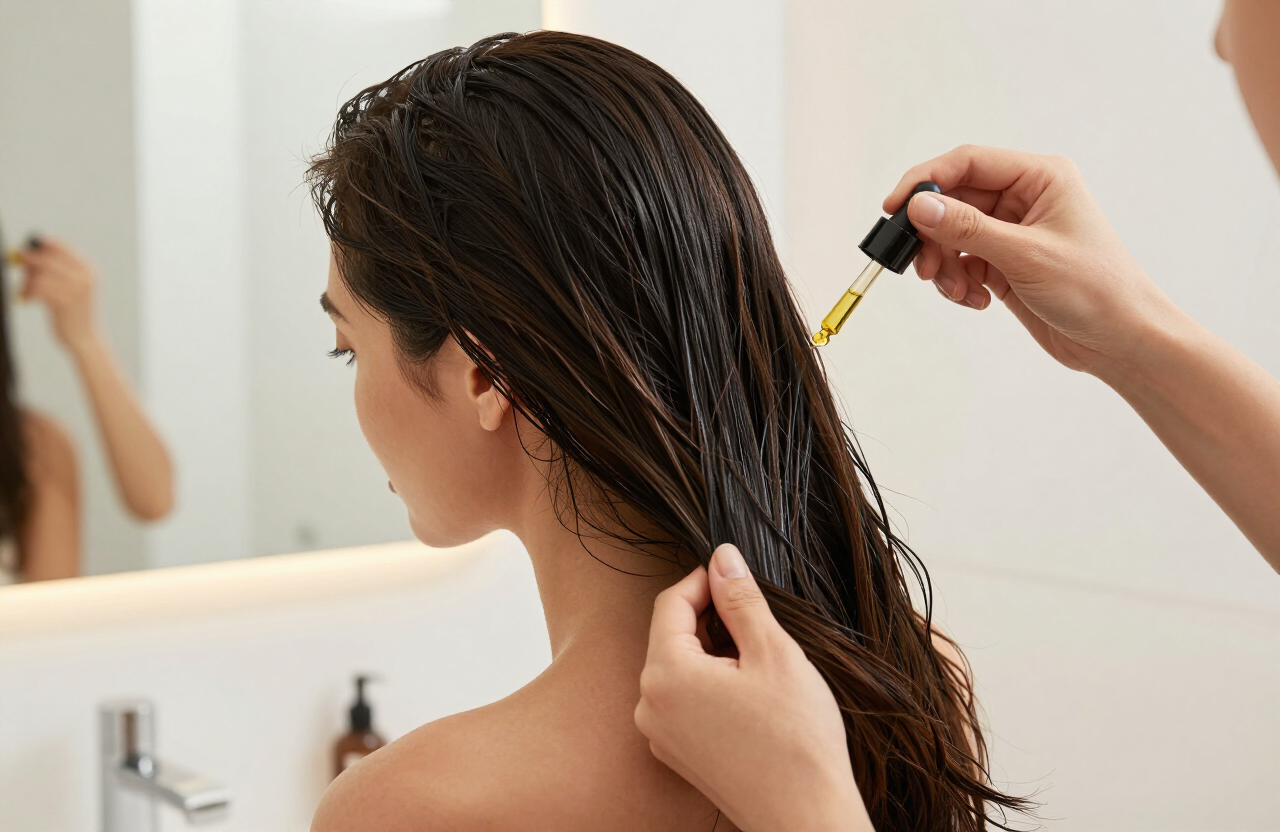
On the days in between, a few drops of argan or jojoba oil worked through the mid-lengths and ends of damp hair seals in moisture straight out of the shower; the same oil applied to dry hair later tames flyaways and adds shine without a second wash. If your hair is fine, keep oil away from your roots entirely and focus only on the ends, where the actual damage tends to accumulate.
Three Mistakes That Quietly Undo Your Progress
Most disappointing results trace back to one of three habits. First, applying essential oils like rosemary undiluted, at full strength they can irritate or even sensitize the scalp, which works against the very thing you're trying to achieve. Mix roughly ten to fifteen drops into two tablespoons of a carrier oil like jojoba or sweet almond oil. Second, choosing a heavy oil for fine hair; castor oil's thickness is an asset for coarse or curly textures and a liability for fine strands, where it just sits on the surface and flattens everything. Third, treating oil as a substitute for a healthy scalp routine rather than a complement to one, oil can't do its job if buildup from dry shampoo or styling products is sitting between it and your skin. Clarify your scalp every one to two weeks so the oils you apply can actually reach it.
How Long to Wait Before Judging Results
Hair grows roughly half an inch a month regardless of what you put on it, which means no routine — oil-based or otherwise, will show dramatic change in two weeks. Dermatologists who work with rosemary oil specifically suggest near-daily application for four to six months before drawing conclusions, since that's roughly how long it takes for a follicle's response to better circulation and reduced breakage to show up as visible length. A 2015 randomized comparative trial published in Skinmed by Panahi and colleagues found rosemary oil performed comparably to 2% minoxidil for androgenetic alopecia over a six-month period, which is a useful benchmark for how long real evaluation takes. Track progress with a monthly photo taken in the same light and from the same angle, rather than relying on memory, which tends to either overstate frustration or understate slow, real progress.
Building Oils Into a Full Hair-Care Routine
Oil works best as one layer in a routine, not the whole routine. Order matters: on wash days, a pre-shampoo oil treatment goes on before cleansing, giving the oil time to work while also protecting hair from the temporary swelling and friction that water and shampoo cause. Conditioner and any leave-in products come after, sealing in what the wash cycle just added rather than competing with the oil for space on the strand. Overnight, swapping a cotton pillowcase for a silk or satin one reduces the friction that undoes a lot of oiling's benefit while you sleep, cotton fibers grip and rough up the hair shaft, quietly causing the exact breakage an oiling routine is trying to prevent.

Protective styles, loose braids, buns, or a satin bonnet, extend the life of an oil treatment by keeping ends from rubbing against clothing and bedding throughout the day. None of this requires buying more products; it just means sequencing what you already use so the oil isn't working against friction, heat, and product buildup it was never going to win against alone.
Frequently Asked Questions
Can hair oil alone regrow hair that's been lost to thinning?
No. Oil supports a healthy growing environment, but significant thinning or bald patches usually warrant a dermatologist's input to rule out causes, hormonal shifts, nutrient deficiencies, autoimmune conditions, or stress-related shedding, that oil alone can't address, even with perfect consistency.
Should I apply oil to wet or dry hair?
Both, for different reasons: damp hair for moisture retention, dry hair for shine and frizz control. Overnight treatments on dry hair, sealed with a silk cap, give the deepest conditioning without evaporating before it can absorb.
How often should I oil my scalp?
One to two times a week is enough for most people. Very dry or damaged hair can handle more; oily scalps usually do better with less, applied only to the lengths and ends rather than the roots.
Is expensive oil more effective than drugstore oil?
Not necessarily. Ingredient quality and correct dilution matter more than price, a well-formulated drugstore rosemary or castor oil will outperform a poorly diluted premium blend nearly every time.
Can I use oils on color-treated or chemically processed hair?
Yes, and often with extra benefit. Color-treated or chemically straightened strands tend to be drier, which makes sealing oils like castor and argan especially useful for replacing the moisture those treatments strip away.
Conclusion
The oils that actually move the needle on hair growth are the unglamorous ones: rosemary for circulation, castor for protection, jojoba or argan for balance, applied consistently rather than occasionally. Give a routine four to six months before deciding whether it's working, and pair it with the basics no oil can replace: a clarified scalp, gentle handling, and patience with a process that was never going to happen overnight.
For more on building a full botanical hair-care routine and the rest of our approach to radiant, sustainable beauty, keep exploring the Glow Pillar at healzenglow.com/glow.
References:
- [1] Dermatologic Therapy (2022). Review of natural topical ingredients — including rosemary oil, caffeine, and pumpkin seed oil — for hair loss and growth support.
- [2] Panahi, Y., et al. (2015). Rosemary oil versus minoxidil 2% for the treatment of androgenetic alopecia: a randomized comparative trial. Skinmed.
- [3] American Academy of Dermatology (aad.org). Public guidance on scalp health and common causes of hair thinning.