
Why Crying Is a Superpower: The Science of Tears
The real neuroscience of crying in 2026: why emotional tears are different from other tears, what a good cry does to your nervous system, and when to worry.
"Don't cry, it won't help" is one of the more scientifically inaccurate things people say to comfort each other. Crying is one of the few emotional responses with a genuine, measurable biochemical mechanism behind it, not a metaphorical release, but something closer to a literal one. Researchers have been studying tears for decades, and what they've found makes a strong case for treating a good cry as a legitimate recovery tool rather than something to apologize for. This guide covers what actually happens in your body when you cry, why it's different from what you might assume, and where the science draws an honest line.
In this guide:
- The three kinds of tears, and why only one matters here
- What's actually in an emotional tear
- The nervous system reset that happens after, not during
- Crying as a social signal, not just a release
- How to let yourself cry when you've forgotten how
- When frequent crying is a signal, not a solution
The Three Kinds of Tears, and Why Only One Matters Here
Your eyes produce three distinct types of tears, and they're not biochemically interchangeable. Basal tears are the constant, low-level lubrication that protects your eyes around the clock. Reflex tears are the sharp response to irritants, onions, wind, smoke, and clear out whatever triggered them. Emotional tears, sometimes called psychic tears, are the only ones triggered by a psychological rather than physical event, and they're the only type with a documented, distinct chemical signature. This is the type researchers mean when they talk about the health benefits of crying, and it's worth being specific about that, since not all tears are doing the same job.
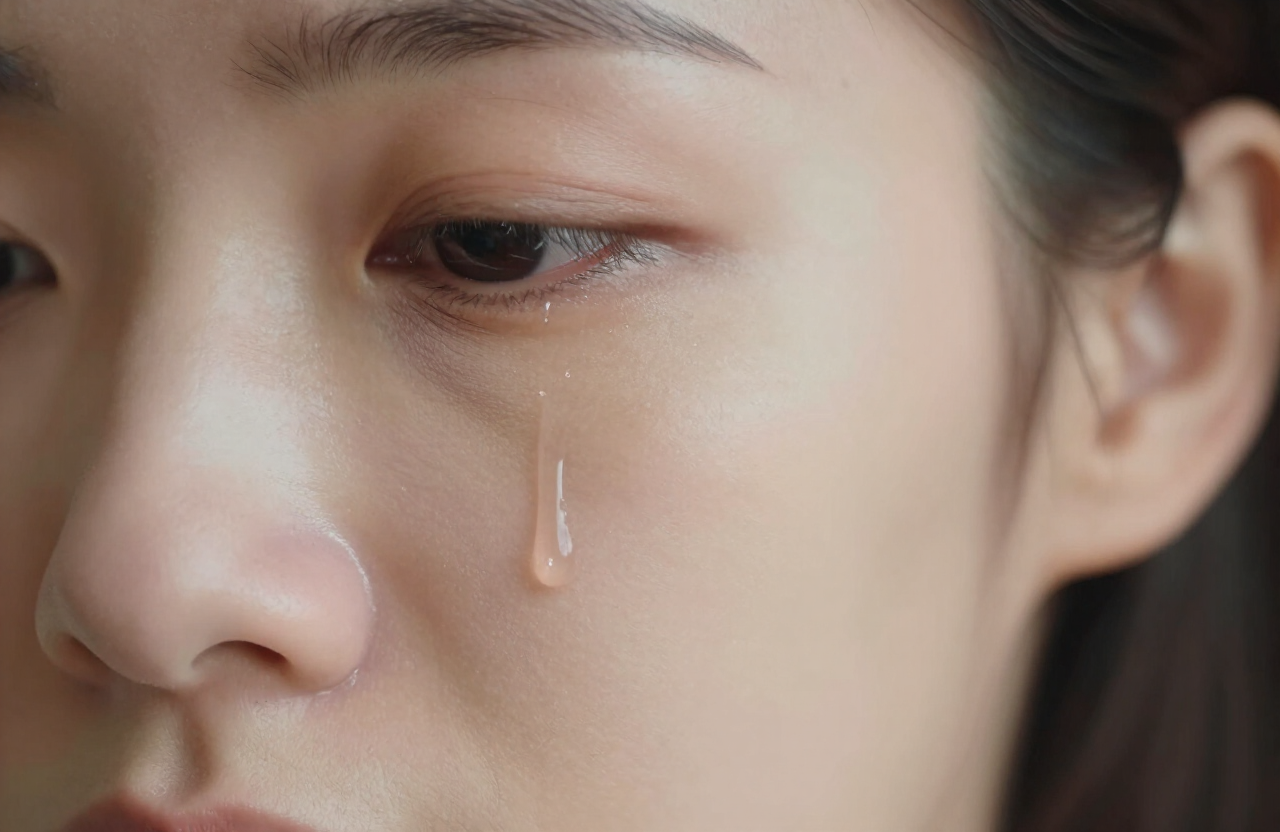
What's Actually in an Emotional Tear
Biochemist William Frey's foundational research found that emotional tears contain measurably higher concentrations of stress-related compounds, including adrenocorticotropic hormone (ACTH) and cortisol, both markers of physiological stress, than reflex tears produced by an irritant. They also contain leucine enkephalin, a natural pain-relieving compound your body produces under duress. The straightforward reading of this finding is striking: crying may be a literal, physical excretion of stress chemistry, not just a symbolic one. Your body appears to have built an actual drain for it.
Alongside this, emotional crying triggers the release of oxytocin and endorphins, the same feel-good chemicals linked to bonding and natural pain relief. Research on tear composition using metabolomics has found distinguishable chemical profiles between tears linked to positive versus negative emotional states, which suggests the body isn't just producing a generic "distress" signal but something more nuanced tied to the specific emotional context.

The Nervous System Reset That Happens After, Not During
A 2014 study published in Frontiers in Psychology found that crying activates the parasympathetic nervous system, the branch responsible for rest, digestion, and recovery, supporting the idea that crying has a genuine self-soothing function built in. But the timing matters more than most people assume: the calming effect tends to emerge in the minutes after the tears stop, not during the crying itself, which is why the middle of a hard cry can feel like the opposite of relief even though relief is usually close behind.
A controlled study of female undergraduates, published on PubMed, tested this directly: participants exposed to sad stimuli who cried were able to withstand a subsequent stressful task longer, showed lower cortisol levels following the stressor, and recovered to baseline mood faster than those who didn't cry. The design makes a genuinely causal case, not just a correlational one, crying appears to build a kind of short-term stress resilience rather than simply following from distress that would have resolved anyway.

Crying as a Social Signal, Not Just a Release
A 2016 study framed crying as primarily an attachment behavior, a signal that reliably recruits comfort and support from the people around you, independent of whatever internal biochemical benefit is happening at the same time. This matches what evolutionary psychologists have long argued: visible tears are a uniquely human signal, one that's hard to fake convincingly and therefore functions as an honest cue that pulls in caregiving from others. This is part of why crying alone in a closed room and crying in front of someone who responds with warmth tend to feel different afterward, the biochemistry is similar, but the social-bonding half of the mechanism only activates with a witness.

How to Let Yourself Cry When You've Forgotten How
For people who learned early that crying was unsafe, met with ridicule, punishment, or simple dismissal, the inhibition can become close to automatic, and the same neural circuits involved in fear conditioning appear to be part of why. If you recognize this in yourself, a few things tend to help: removing the audience first, since performing composure for someone else is one of the fastest ways to shut the response back down; letting a physical trigger do some of the work, since sad music or a specific film can lower the threshold more reliably than trying to access the feeling through willpower alone; and treating the first few attempts as practice rather than a test you're failing if nothing happens, the inhibition took years to build and rarely lifts on the first try.
When Frequent Crying Is a Signal, Not a Solution
None of this means crying is unconditionally good in unlimited quantity. Persistent, daily crying, especially the kind that feels uncontrollable or disconnected from a specific trigger, can be a visible symptom of depression, an anxiety disorder, or chronic unaddressed stress, and repeated activation of the same cortisol-and-adrenaline stress response, day after day, has its own costs to sleep and concentration over time. The takeaway isn't that crying itself becomes harmful; it's that a sharp increase in how often you're crying is worth paying attention to as data, not just riding out. There's also a meaningful difference between everyday emotional crying and crying connected to unresolved trauma, the latter can carry a different physiological signature and often benefits from being processed with professional support rather than journaling or self-soothing alone.
Frequently Asked Questions
Why do I feel worse in the middle of crying and better afterward?
The parasympathetic, calming response tends to arrive in the minutes after tears stop rather than during the crying itself, so the emotional peak of a hard cry can feel like the low point even though the biochemical relief is close behind.
Is it healthy to cry every day?
Occasional daily crying during a genuinely hard period isn't automatically concerning, but persistent daily crying that feels uncontrollable or unconnected to a specific cause is worth mentioning to a doctor or therapist, since it can be a symptom of depression or an anxiety disorder.
Why can't I cry even when I know I need to?
Learned suppression from childhood, especially if crying was punished, mocked, or dismissed, can make the response feel almost automatically blocked. Removing the audience, using a physical trigger like music, and treating early attempts as practice tends to help more than forcing it.
Does crying actually lower cortisol?
Controlled research has found lower cortisol and faster mood recovery in people who cried in response to a stressor compared to those who didn't, alongside the elevated ACTH and cortisol already present in the tears themselves.
Is crying in front of someone better than crying alone?
Both offer the biochemical benefits of emotional tears, but crying in front of someone who responds with warmth adds the social-bonding function researchers describe as an attachment behavior, a benefit that crying in isolation doesn't fully provide.
Can crying too much during an argument make things worse?
It can shift the conversation's focus onto managing the crying itself rather than the original issue, which is worth naming out loud ("I need a minute, this isn't about avoiding the conversation") rather than suppressing the tears entirely, which tends to just delay the same response later.
Conclusion
Crying was never the failure of composure it's often framed as, it's one of the few emotional responses with a documented biochemical mechanism, a measurable effect on stress hormones, and a social function that pulls support toward you rather than pushing it away. The next time a good cry catches you off guard, it's worth treating it less like an inconvenience to manage and more like exactly what your nervous system built it to be.
For more on the biology behind emotional healing, keep exploring the Heal Pillar at healzenglow.com/heal.
References:
- [1] Frey, W. H. Foundational biochemical research on the composition of emotional versus reflex tears.
- [2] Gračanin, A., Bylsma, L. M., & Vingerhoets, A. J. J. M. (2014). Is crying a self-soothing behavior? Frontiers in Psychology.
- [3] Peer-reviewed research on physiological stress recovery following emotional crying, including cortisol and mood-recovery measures.